The best storage bathroom ideas use space you already have but ignore: the wall above the toilet, the empty air under the sink, the back of the door, and the narrow gap beside the vanity. If your bathroom is small, start with over-the-toilet shelves or an under-sink organizer. If you rent, lean on over-the-door hooks and a slim rolling cart, since neither needs a drill. If you own and have a free afternoon, wall and corner shelves give you the most storage for the effort.
Most bathroom clutter comes from one problem. Everything ends up on the counter, or in one deep cabinet where you cannot see the back. A bathroom also has little wall area, hard surfaces and constant humidity, so storage has to be vertical, moisture-tolerant and easy to reach. That rules out a lot of generic organizing advice.
At Home The Spruce, we write about organizing and small-space fixes for homeowners and renters. Each of the five ideas below explains how it works, who it suits and what to check before you commit. Measure first, pick one or two ideas, and you can clear your counter in a single afternoon.
1. Over-the-toilet shelves or a freestanding cabinet
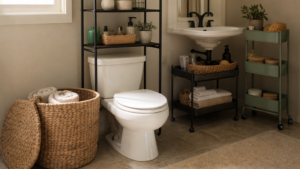
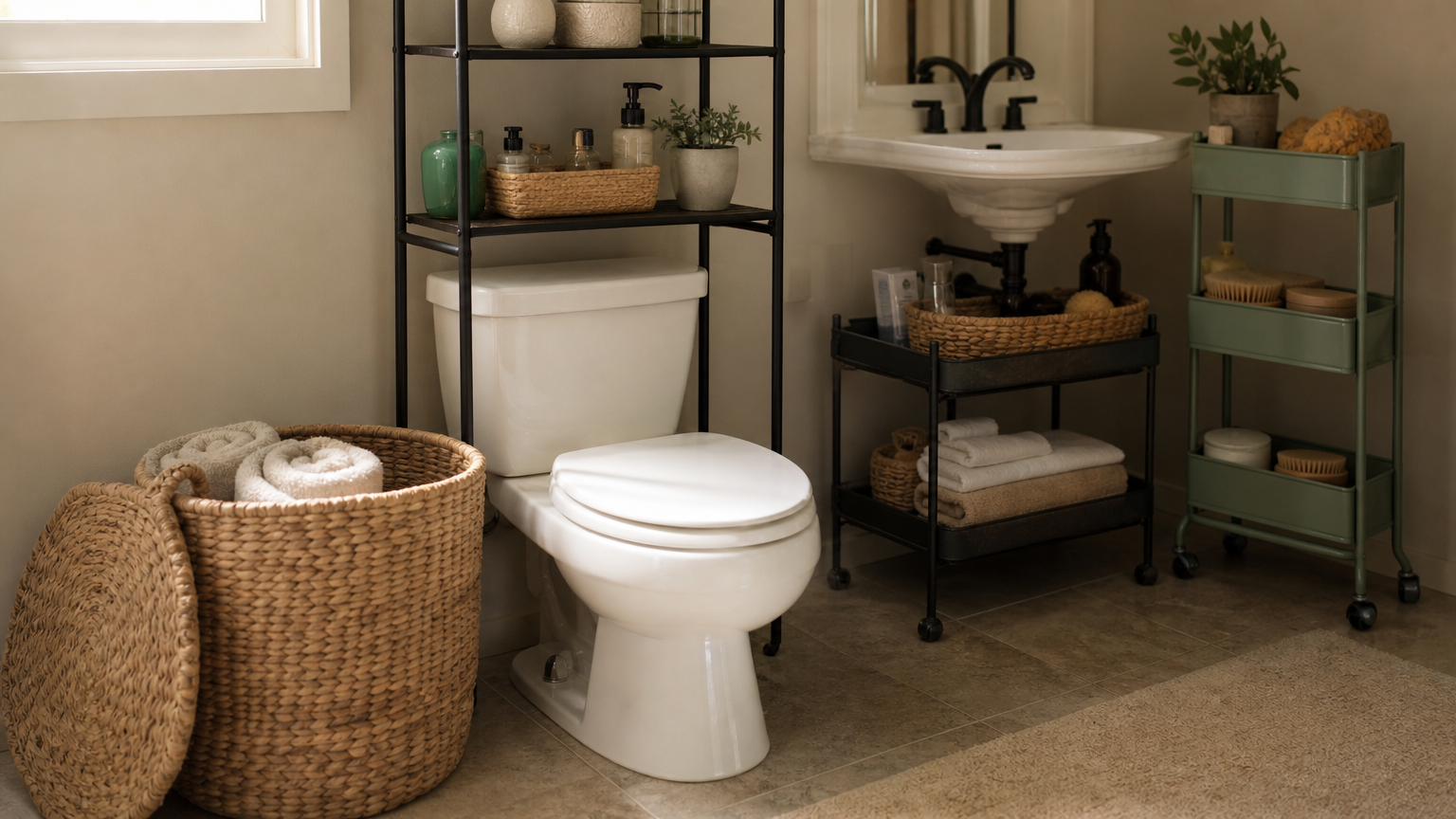
An over-the-toilet unit is the fastest way to add storage to a small bathroom, because the wall above the tank sits empty in most homes. Three or four shelves there give you extra storage in space that holds nothing today.
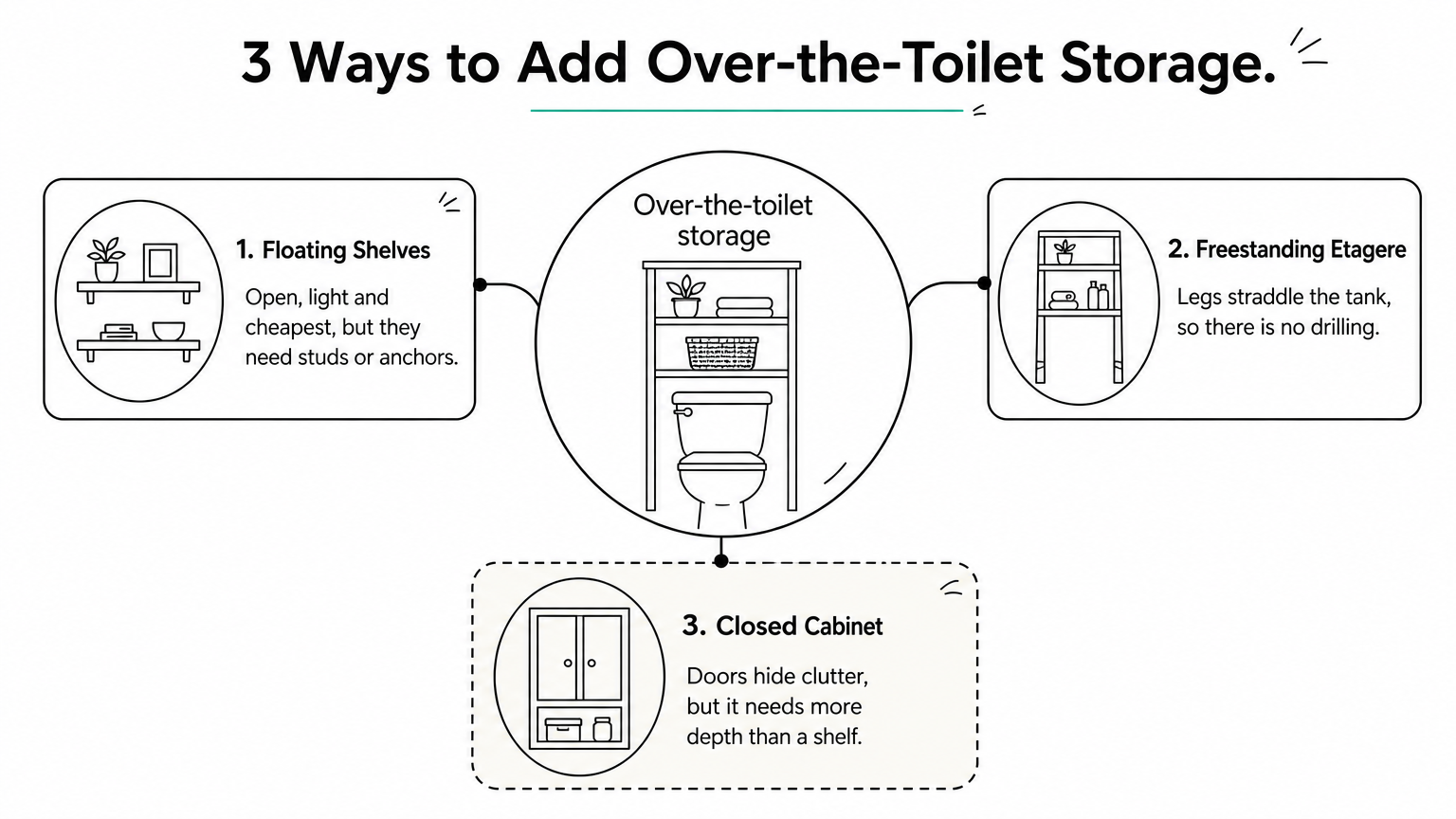
How it works
Choose one of three formats, depending on how much you want to hide and whether you can drill:
- Floating shelves: open, light and the cheapest, but they need studs or proper wall anchors.
- Freestanding etagere: the legs straddle the tank, so there is no drilling at all.
- Closed cabinet: doors hide the clutter, but a cabinet needs more depth than a shelf.
Whichever you pick, make sure the tank lid still lifts straight off and the flush handle stays clear. Use the shelves for toilet paper, spare towels and lidded baskets, and keep the top shelf for light decorative items.
Who it suits and what to avoid
This idea suits any bathroom without a linen closet. Renters should choose the freestanding etagere, since it leaves the walls untouched.
Open shelves in the splash zone collect dust and moisture, so a closed cabinet is better if the toilet sits close to the tub. Also keep medications elsewhere. Heat and humidity are not good for them, and a bedroom shelf is a better home.
Look up before you look down: the wall above the toilet is the biggest unused storage space in most small bathrooms.
2. Under-sink tiers and pull-out drawers
Stackable drawers, two-tier organizers and U-shaped pull-outs turn the cabinet under the sink from a dumping ground into usable storage. The only obstacle is the plumbing, and the right organizer works around it.
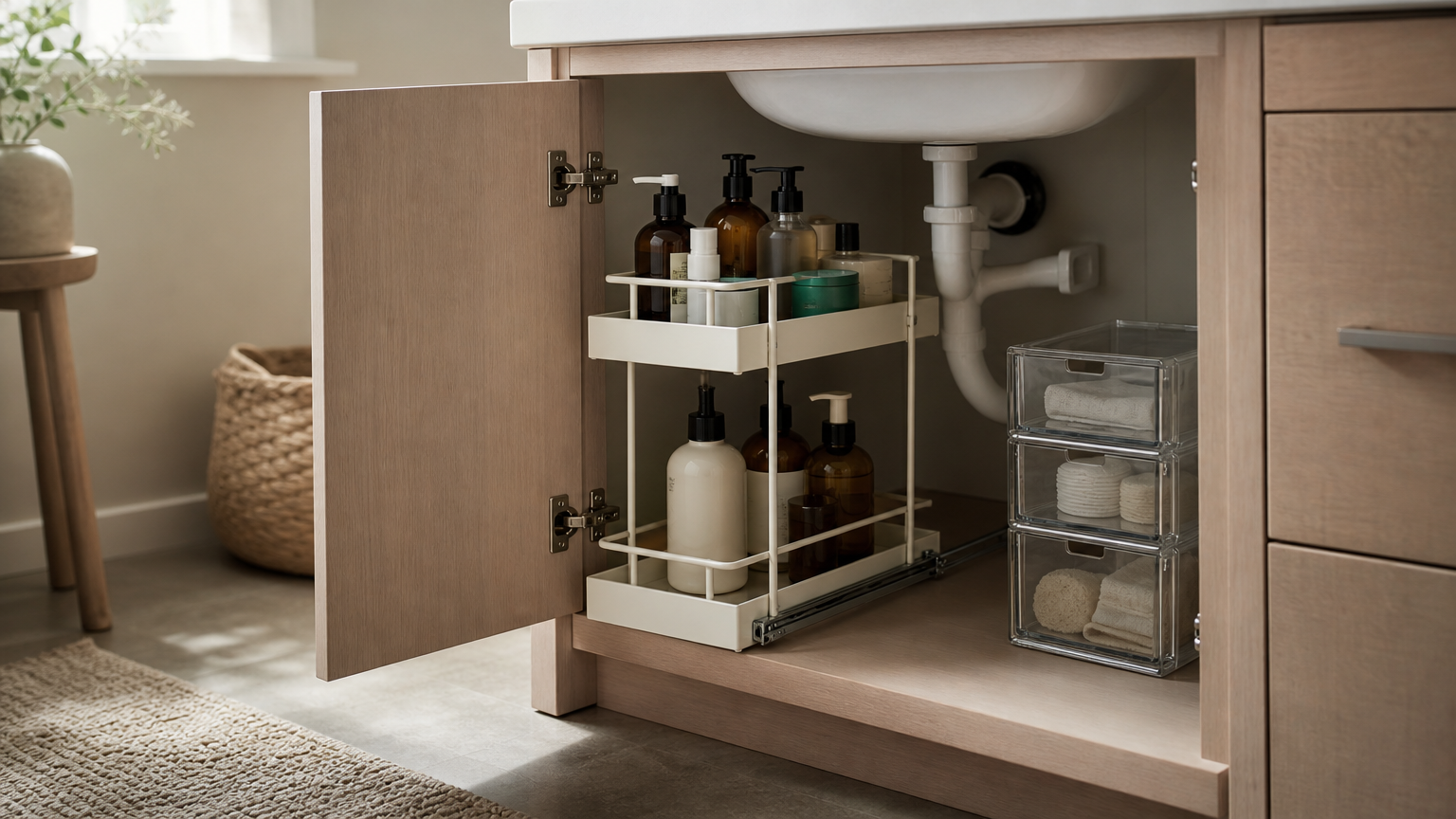
How it works
Measure the inside width, depth and height, and note where the drain trap and supply lines sit. Here is a worked example. A cabinet with a 20-inch-tall opening holds one layer of loose bottles on its floor. A two-tier organizer splits that height into two layers of about 9 inches each, so you roughly double the shelf area without losing access to the back.
Match the organizer to what you store:
- U-shaped pull-out: wraps around the trap and slides out for cleaning supplies.
- Two-tier sliding rack: cleaners below, sponges and rags above.
- Clear stackable drawers: best for hair tools, spare toiletries and travel sizes.
Who it suits and what to avoid
Anyone with a vanity cabinet benefits, and it works well for renters because nothing attaches to the walls. It is also the best fix for deep cabinets where things disappear at the back.
Pick plastic or metal bins rather than cardboard, because a slow leak ruins cardboard fast. If children live in the home, add a child lock, since this is where cleaning products usually end up.
If you cannot see the back of the cabinet, add a layer you can pull forward.
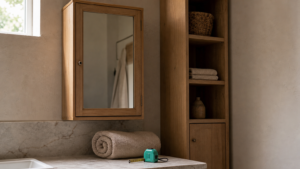
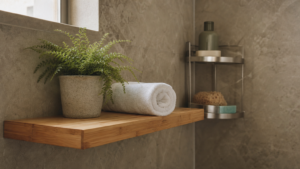
3. Floating and corner wall shelves
Wall shelves put towels, baskets and everyday items at eye level, and a corner unit uses the spot that most bathrooms waste. Together they are the strongest of all the bathroom ideas with storage that look good as well as work.
How it works
Mount floating shelves into studs or use anchors rated for the load. Space them about 12 inches apart if you want to stack folded towels, and closer together for jars and small baskets. A common layout is three shelves on a 24-inch stretch of wall, with towels on the bottom, baskets in the middle and a small plant or candle on top.
A corner shelf or cabinet fits beside the vanity or behind the door. Open corner shelves hold spare towels and toilet paper. A closed corner cabinet hides the less pretty items.
Who it suits and what to avoid
Homeowners and anyone comfortable with a drill get the most from this idea. Renters can ask the landlord first, or choose a freestanding corner unit instead.
Check the weight rating on brackets before loading them, because wet towels weigh more than dry ones. Choose sealed wood, painted metal or glass rather than raw wood, and keep shelves out of the direct spray of the shower.
Shelves at eye level turn a bare wall into the easiest place to grab a towel.
4. Over-the-door hooks and cabinet-door racks
The back of the door and the inside of cabinet doors give you storage that uses no floor space and needs no drilling. This is one of the best ideas for storage in a bathroom with almost no wall area.
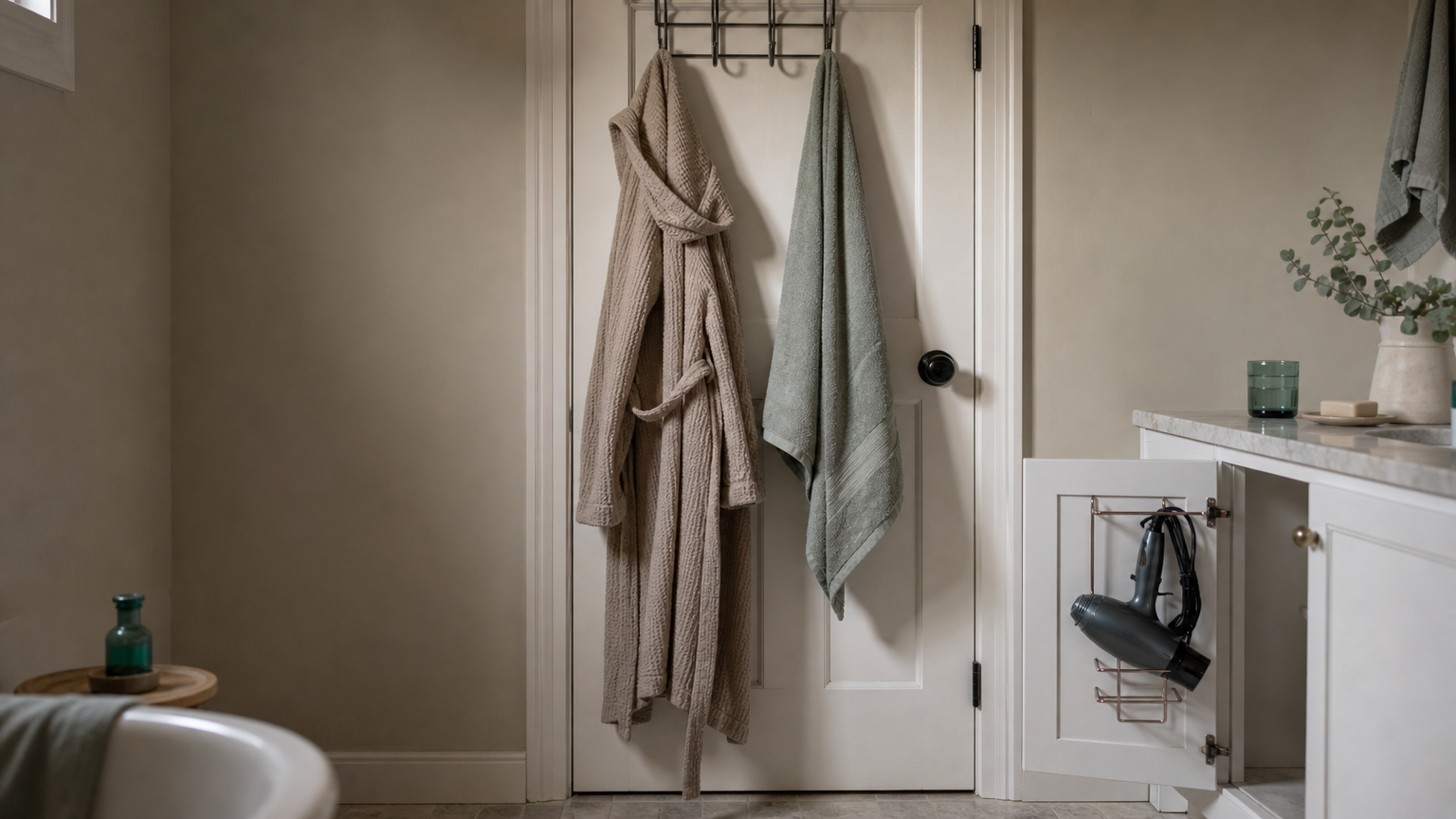
How it works
Over-the-door hooks hold robes and towels. Space them out rather than stacking items on one hook, and towels dry faster. Check your door thickness first, since standard interior doors are commonly about 1⅜ inches thick, and make sure the hooks fit.
Inside the vanity door, a cabinet-door rack holds the hair dryer, flat iron and curling iron in one place. It also frees up drawer space and stops cords from tangling. A few adhesive hooks on the same door can hold a small mesh bag for bath toys or cleaning cloths.
Who it suits and what to avoid
Renters, shared bathrooms and kids’ bathrooms get the most from this idea. Give each person one hook and towels stop piling up on the floor.
Do not overload the door. If it no longer closes fully or the hinges sag, remove something. Let hair tools cool completely before you tuck them into a rack.
Every door has two unused surfaces, and both can carry hooks.
5. A slim rolling cart
A slim rolling cart adds three tiers of storage with no installation, which makes it the best choice for a bathroom with no cabinet or for anyone who wants storage they can move. It slides into the gap beside the toilet, vanity or tub.
How it works
Many slim carts are under 10 inches wide, so measure the gap before you buy. Then assign each tier a job:
- Top tier: daily items such as toothpaste, face wash and lotion.
- Middle tier: skincare, makeup and styling products in small baskets.
- Bottom tier: towels, toilet paper and heavier bottles, which keeps the cart stable.
For the shower itself, add a hanging caddy in stainless steel or aluminum, which resists rust.
Who it suits and what to avoid
Studio apartments, rentals and bathrooms without a vanity cabinet are the natural fit. You can also roll the cart out when you need floor space.
Choose a cart with locking wheels and rust-resistant metal or plastic. Put the heaviest items on the bottom tier, and keep the cart out of reach of toddlers who might pull it over.
If you cannot add storage to the walls, add it on wheels.
Pick one idea and start there
Bathroom storage works when you use vertical space and hidden space: above the toilet, under the sink, on the walls, behind the doors and beside the vanity. Over-the-toilet shelves and under-sink organizers give small bathrooms the biggest gain. Hooks and a rolling cart suit renters, and wall shelves suit owners who can drill.
Measure the space, choose moisture-friendly materials and keep heavy items low. One change is enough to clear the counter, and a second finishes the job. For more practical ideas, browse the small-space organization guides on Home The Spruce and keep working through your home room by room.