The best cabinets for bathroom storage are the ones that use space you already have but don’t use. Choose a wall-mounted cabinet if floor space is tight, a freestanding cabinet if you have a spare 12 inches of wall, and a tall linen cabinet if towels are your main clutter. Choose an over-the-toilet cabinet to use dead vertical space, and a corner cabinet for an awkward gap.
Most bathrooms are small, and the clutter ends up on the vanity or the tub edge. When you start shopping, you find hundreds of near-identical white boxes with different names. The real question is not which brand to buy but which shape fits your layout without blocking a door, a drawer, or your knees.
This guide walks through five types, one at a time. For each, you get how it works, who it suits, a typical size, and a starting price. After that, you get a side-by-side comparison, material and safety checks, and a few tips for organizing the cabinet once it is up.
1. Wall-mounted bathroom cabinets
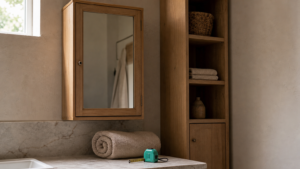
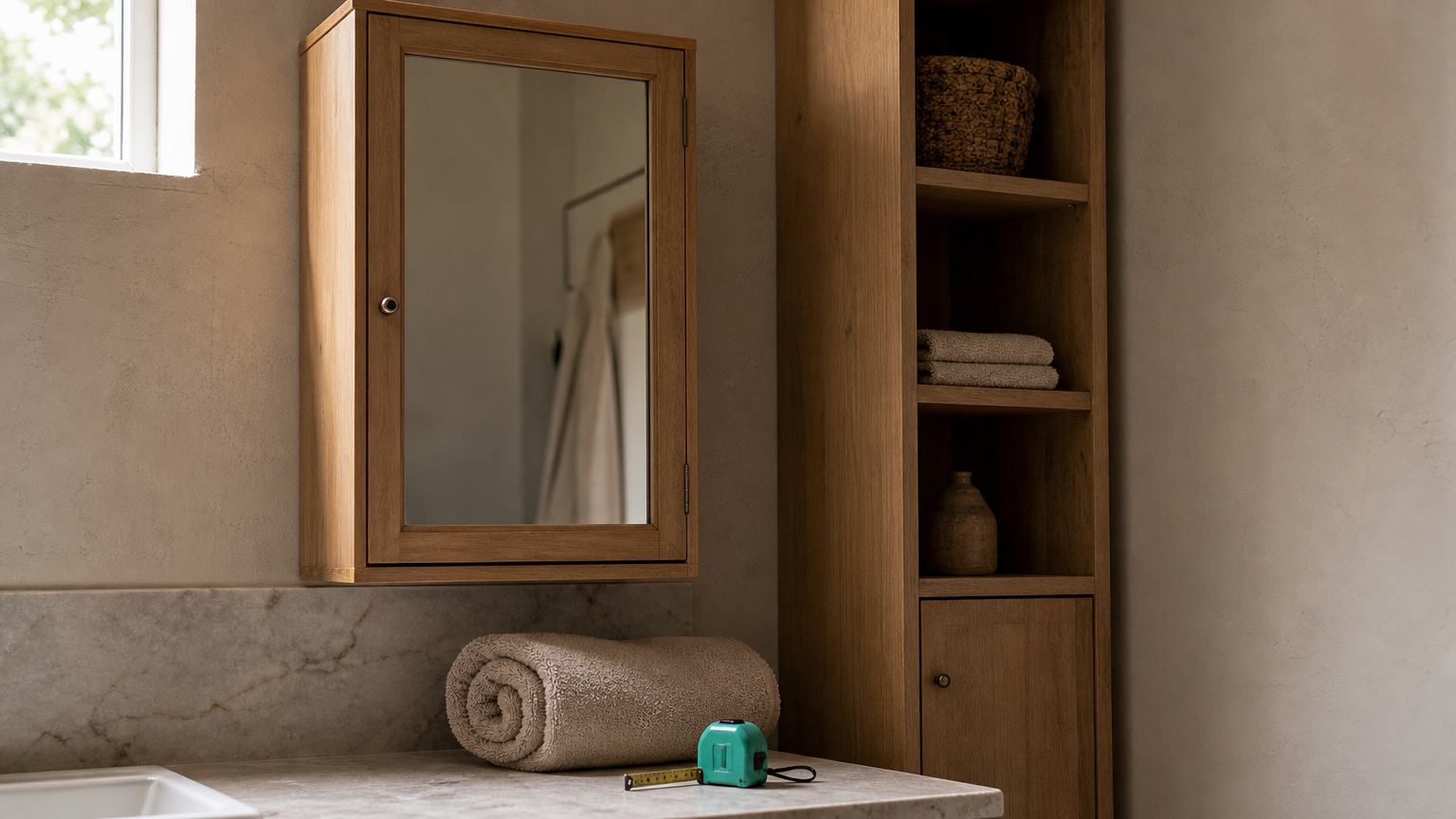
A wall-mounted cabinet gives you closed or open storage without taking any floor space, so it is the safest first choice for a small bathroom. It works above a toilet, above a washing machine, beside a mirror, or on any blank wall you walk past.
How it works
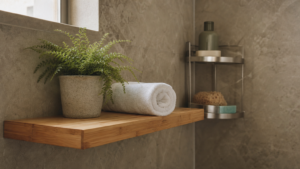
The cabinet hangs from a rail, cleats, or screws driven into the wall. Most are shallow, around 6 inches deep, so they do not stick out into your head space. You can choose closed doors to hide clutter, open shelves to display folded towels, or a mix of both.
Hang it into studs, which are usually spaced 16 inches apart, or use anchors rated well above the cabinet’s loaded weight. A cabinet full of bottles and towels is much heavier than it looks in the box.
Who it suits, size, and cost
This type suits renters with small bathrooms, powder rooms, and anyone who needs to keep the floor clear for a bathmat or a scale. A common size is 18 inches wide, 6 inches deep, and 37 inches tall, though wider versions near 27 inches also exist.
- Typical size: 18 x 6 x 37 inches for a standard door cabinet.
- Typical price: from about $30 for a small box to around $200 for a larger soft-close cabinet.
- Watch for: studs that do not line up with the mounting holes.
If the floor is your problem, solve it on the wall.
2. Freestanding floor cabinets
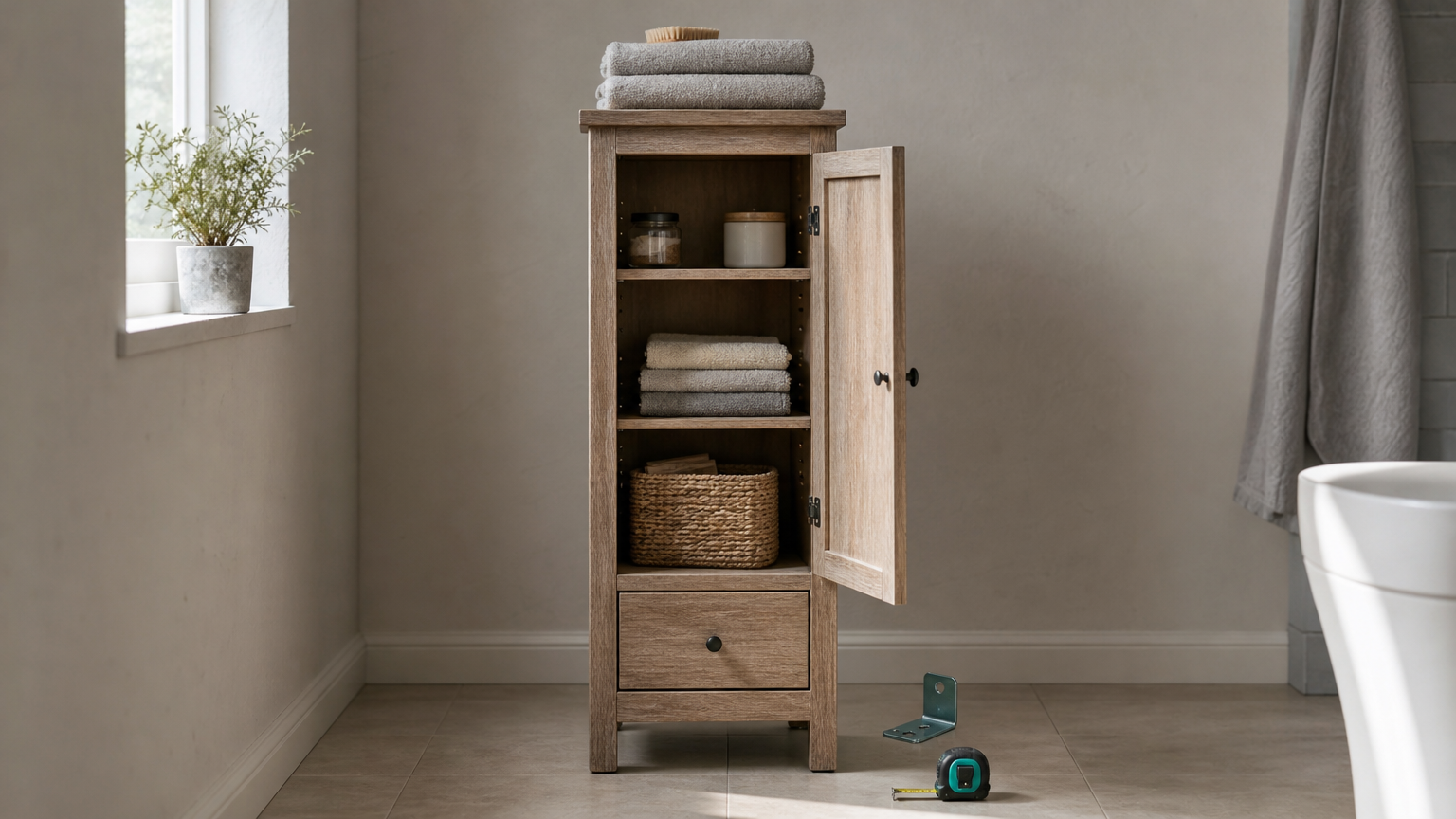
A freestanding cabinet is the easiest to install and the most flexible, because you set it down and you are done. It suits bathrooms with a spare strip of floor beside the vanity or behind the door.
How it works
These cabinets stand on the floor, usually 28 to 33 inches tall, with a top shelf for décor or a towel stack. Inside, you get adjustable shelves and sometimes a drawer. Many are narrow, around 12 inches deep, so they save space compared with a bulky vanity.
You can also move one later, which helps renters. Anchor it to the wall anyway. Many makers include a bracket for that, and it stops tipping if a child climbs on the open door.
Who it suits, size, and cost
Freestanding cabinets suit medium bathrooms, shared family bathrooms, and anyone who does not want to drill into tile. A typical size is 22 inches wide, 12 inches deep, and 32.5 inches tall.
Here is a worked example. Your bathroom is 60 inches wide between the walls, and the cabinet is 12 inches deep. That leaves 48 inches of walkway. A wall-mounted cabinet at 6 inches deep would leave 54. Both clear a basic walkway, but the extra 6 inches matters when a door swings in.
- Typical size: about 22 x 12 x 32.5 inches, roughly 1.8 square feet of floor.
- Typical price: around $45 to $110 for painted engineered wood, and $250 or more for solid wood.
- Watch for: door swing and whether the toilet or tub edge blocks access.
A freestanding cabinet is only a bargain if you measure the walkway it leaves.
3. Tall linen cabinets
A tall linen cabinet holds the most storage for the least floor area, because it uses height. It is the right pick when towels, spare toilet paper, and cleaning supplies are what overflow.
How it works
A narrow body, often 14 to 18 inches wide, stands from the floor up to 60 to 77 inches. You get four to six shelves, sometimes with a drawer at the bottom or open cubbies at the top for rolled towels. Most hold a full stack of bath towels on a single shelf.
Tall cabinets tip more easily than short ones, so anchoring is not optional. Use the wall bracket that comes in the box and screw it into a stud.
Who it suits, size, and cost
This type suits family bathrooms and homes without a hall closet. A common size is 15 inches wide, 13 inches deep, and 60 inches tall, which takes about 1.4 square feet of floor.
- Typical size: 15 x 13 x 60 inches, or 18 x 15 x 77 inches for the tallest.
- Typical price: roughly $125 to $400, depending on material and soft-close doors.
- Watch for: ceiling height, light fixtures, and a door that opens into the cabinet.
Tall cabinets trade floor area for shelf area, and that is a good deal in a crowded bathroom.
4. Over-the-toilet cabinets
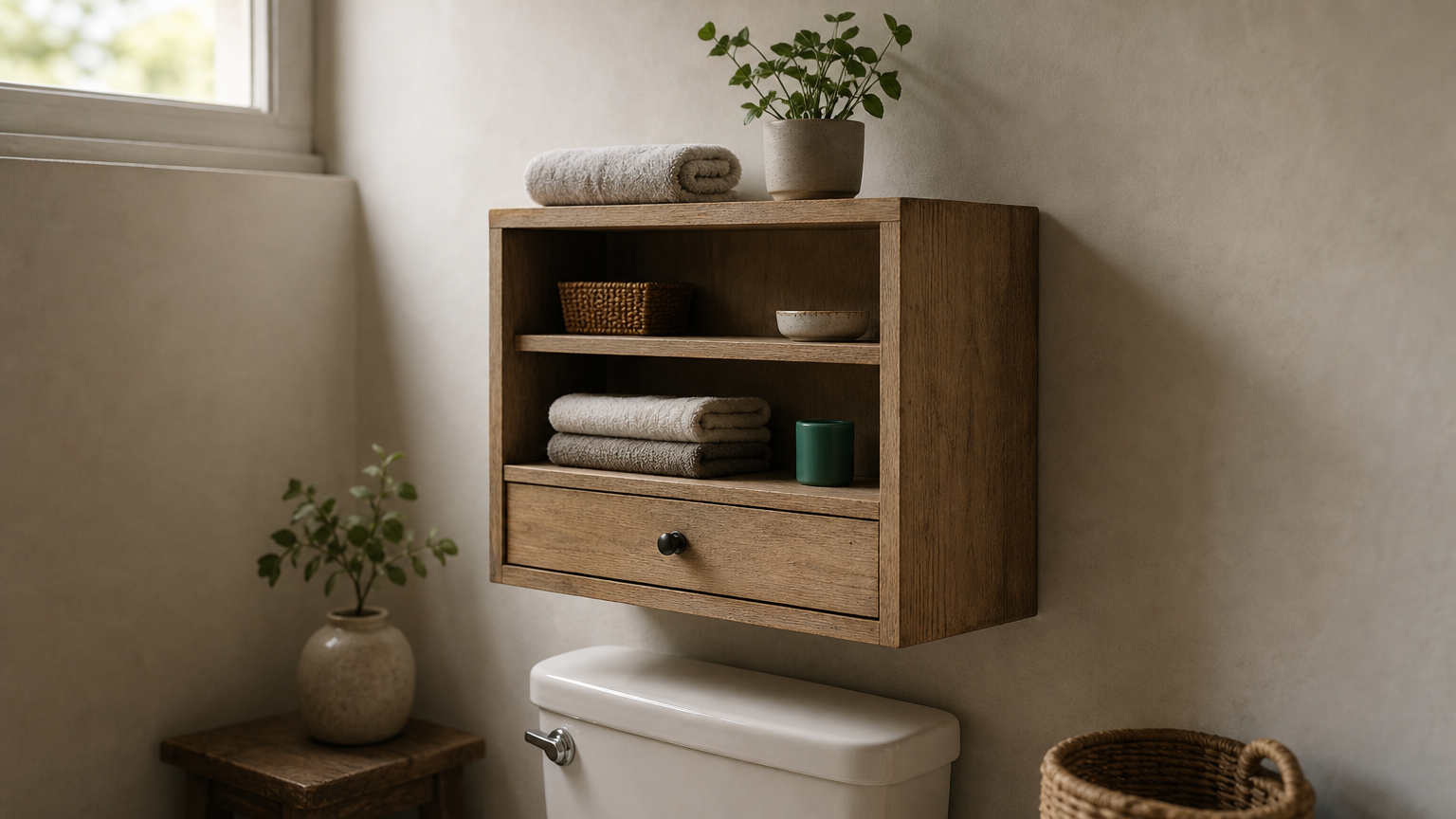
An over-the-toilet cabinet turns the least useful space in the room into shelf space. It is a smart pick if you have no spare wall anywhere else.
How it works
There are two designs. A wall-hung cabinet bolts to the wall above the tank. A floor-standing frame straddles the toilet with side legs and shelves above. Either way, the key measurements are the height of your tank plus lid, and the gap to the ceiling.
Leave enough room under a hung cabinet to lift the tank lid for repairs. Keep the depth shallow, ideally under 10 inches, so you do not bump your head when you stand up. Building codes in most US areas also require about 15 inches from the toilet centerline to a side wall or fixture and 21 inches of clear space in front, so do not add a frame that crowds those.
Who it suits, size, and cost
This type suits small bathrooms and powder rooms where a vanity is the only other storage. It also fits rooms with no wall space but a lot of height.
- Typical size: varies, so measure your tank width and the height to the ceiling before you shop.
- Typical price: many options start near $85.
- Watch for: a frame that pushes you into the tub or sink, and a ceiling light too close.
Measure from the tank lid to the ceiling, then subtract the lid lift.
5. Corner cabinets
A corner cabinet uses the one spot that other cabinets cannot, the corner. It suits bathrooms with a dead corner beside the vanity or behind a door.
How it works
These cabinets either sit on the floor or hang high, with a triangular or flat-backed body that tucks into a 90-degree corner. A floor model can reach about 25 inches wide, 13 inches deep, and 31 inches tall. Slim versions are as narrow as 10 inches across.
Walls in older bathrooms are rarely perfectly square, so check the gap with a level before you buy. Baseboards can also push a floor cabinet a half inch off the wall, so look for a model with a recessed back.
Who it suits, size, and cost
Corner cabinets suit small, oddly shaped bathrooms and rooms where a toilet sits close to a side wall. They give less storage than a tall cabinet, but they cost less floor in a space that no one walks through.
- Typical size: 25 x 13 x 31 inches for a two-door model, or about 10 x 8 x 30 inches for a slim one.
- Typical price: from about $30 for a slim model, more for solid wood.
- Watch for: shelf depth, since a triangular shelf holds less than it appears to.
A corner cabinet is the one cabinet that gives you storage in space you never used.
How to choose the right one for your space
Choose by the space you have first, then the items you store, then the finish. The table below puts the five types side by side, and the checks after it keep you from buying a cabinet that sags or swells.
Compare the five types side by side
| Type | Typical size (W x D x H) | Floor space used | Entry price | Best for |
|---|---|---|---|---|
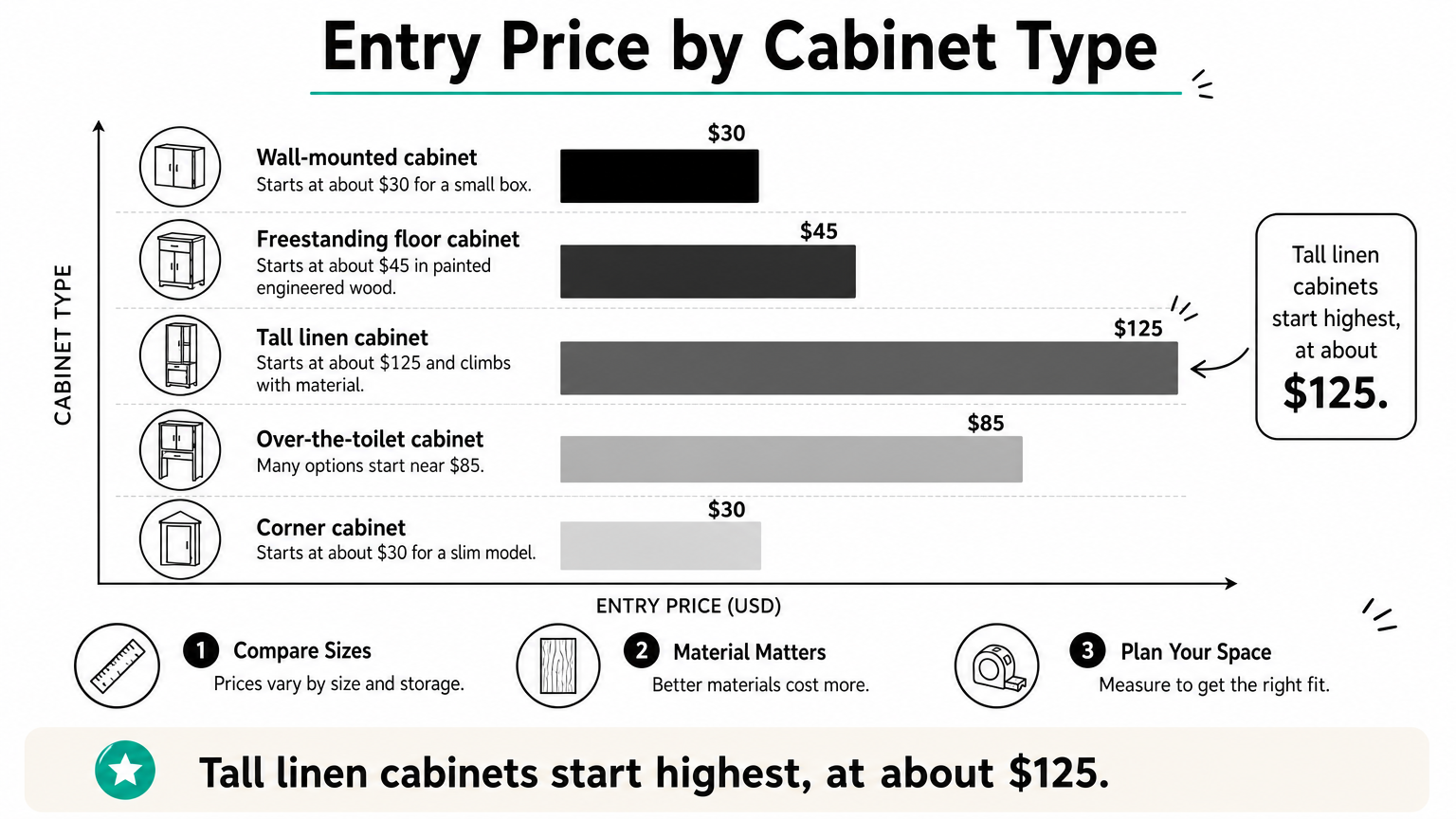
| Wall-mounted | 18 x 6 x 37 in | None | about $30 | Tiny bathrooms, powder rooms |
| Freestanding | 22 x 12 x 32.5 in | about 1.8 sq ft | about $45 | Spare wall beside the vanity |
| Tall linen | 15 x 13 x 60 in | about 1.4 sq ft | about $125 | Towels and bulk supplies |
| Over-the-toilet | Varies by tank and ceiling | None to very little | about $85 | Rooms with no spare wall |
| Corner | 25 x 13 x 31 in | Dead corner only | about $30 | Odd gaps and door corners |
If you have two bathrooms, mix types. Use a tall cabinet in the one with the family traffic and a wall cabinet in the guest bath.
Check materials and safety before you buy
Bathrooms are humid, so material matters. Sealed or painted MDF, solid wood, and bamboo hold up well when the finish is intact. Bare particleboard swells at the edges once moisture reaches it. Cabinets with a plain finish and no sealed edges tend to fail first.
Kitchen cabinets can work for bathroom storage if you seal the cut edges and the bathroom has a working fan. They are not built for steam, though. Anchor every freestanding and tall cabinet to the wall, and look for soft-close hinges if you share the room with kids.
Organize the inside
A cabinet only helps if you can find things in it. Group items by use: daily, weekly, and spare. Put daily items at eye level, and use open baskets or bins on the lower shelves so you can pull out a whole category at once. Keep heavy bottles low and lighter items high, and use a short bin for loose small items like hair ties.
Pick the shape, then the finish
Start with the space, not the style. A wall-mounted cabinet fits the tightest rooms, a freestanding cabinet fits a spare strip of wall, a tall linen cabinet suits towel storage, an over-the-toilet cabinet claims dead height, and a corner cabinet fills the gap nobody uses. Measure the walkway, anchor the cabinet, and choose a sealed finish.
Once the cabinet is in, the rest of the room is easier to manage. If you want more help with small bathrooms, you can find more bathroom storage and organization guides on Home The Spruce.