If you’re asking how do I get rid of gnats in houseplants, the fix has four parts. Let the top inch of soil dry out between waterings, put yellow sticky traps next to the pots to catch adults, treat the soil with Bti or a diluted hydrogen peroxide drench to kill larvae, and keep the routine going for about four weeks. Skip any one part and the gnats usually come back.
You’ve probably already swatted a few, sprayed the air, or even swapped the soil, and the tiny black flies still drift up every time you walk past the plant. That happens because the flying adults are only one stage of the problem. Eggs and larvae sit in the damp soil, and a fresh batch of adults emerges while you’re busy fighting the last one.
This guide shows you how to confirm you have fungus gnats, then walks through four steps in the order that works. You’ll get exact amounts, a four-week schedule, and a section on office plants, where watering is often nobody’s job.
Why gnats take over your houseplants
Fungus gnats appear when potting soil stays wet. Females lay eggs on the damp surface, and the larvae feed on fungi and decaying organic matter in the pot.
Confirm you have fungus gnats
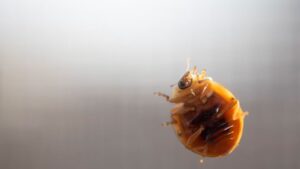
Adult fungus gnats are delicate, dark flies about 1/8 inch long with long legs. They flutter around the soil and fly toward windows and lamps. Larvae are pale, wormlike, up to 1/4 inch long, and have a black head. Fruit flies hover around ripe produce instead, so if the flies cluster at the soil, you have gnats.
Adults don’t harm your plants. Larvae mostly eat fungi, but in large numbers they can chew root hairs, which hurts seedlings and weak plants. In most homes the damage is rare and the real problem is the nuisance.
Why one treatment never works
A female can lay up to 200 eggs, and generations overlap indoors, so every stage is present at once. Egg to adult takes about three to four weeks, so you have to keep treating for that long. This table shows what reaches each stage.
| Stage | Where it is | How long it lasts | What reaches it |
|---|---|---|---|
| Eggs | Soil surface cracks | 3 to 6 days to hatch | Dry soil surface |
| Larvae | Inside the soil | 1 to 2 weeks | Bti, peroxide drench, dry soil |
| Pupae | Near the soil surface | About 4 to 5 days | Dry soil, repotting |
| Adults | In the air and on the soil | About 1 week | Sticky traps |
Adults are the symptom, and the larvae in damp soil are the problem.
Step 1. Let the soil dry out
Drying the soil surface is the single most effective step, because it removes the egg-laying site. If you only do one thing from this guide, do this.
Change how you water
Water only when the top inch of soil is dry. Push a finger in to check. Never let water sit in the saucer.
You can also water from the bottom. Set the pot in a tray of water until the surface darkens, then drain it fully. The roots drink while the surface stays dry. Moisture-loving plants like ferns still need steady moisture, so for those, dry only the top inch and don’t let the whole pot dry out.
Cap the soil with sand or gravel
Spread a ½ to 1 inch layer of coarse sand or fine gravel over the soil. It keeps the surface drier and makes it a poor spot for egg laying. Pick off dead leaves and debris first, since gnats feed on those too.
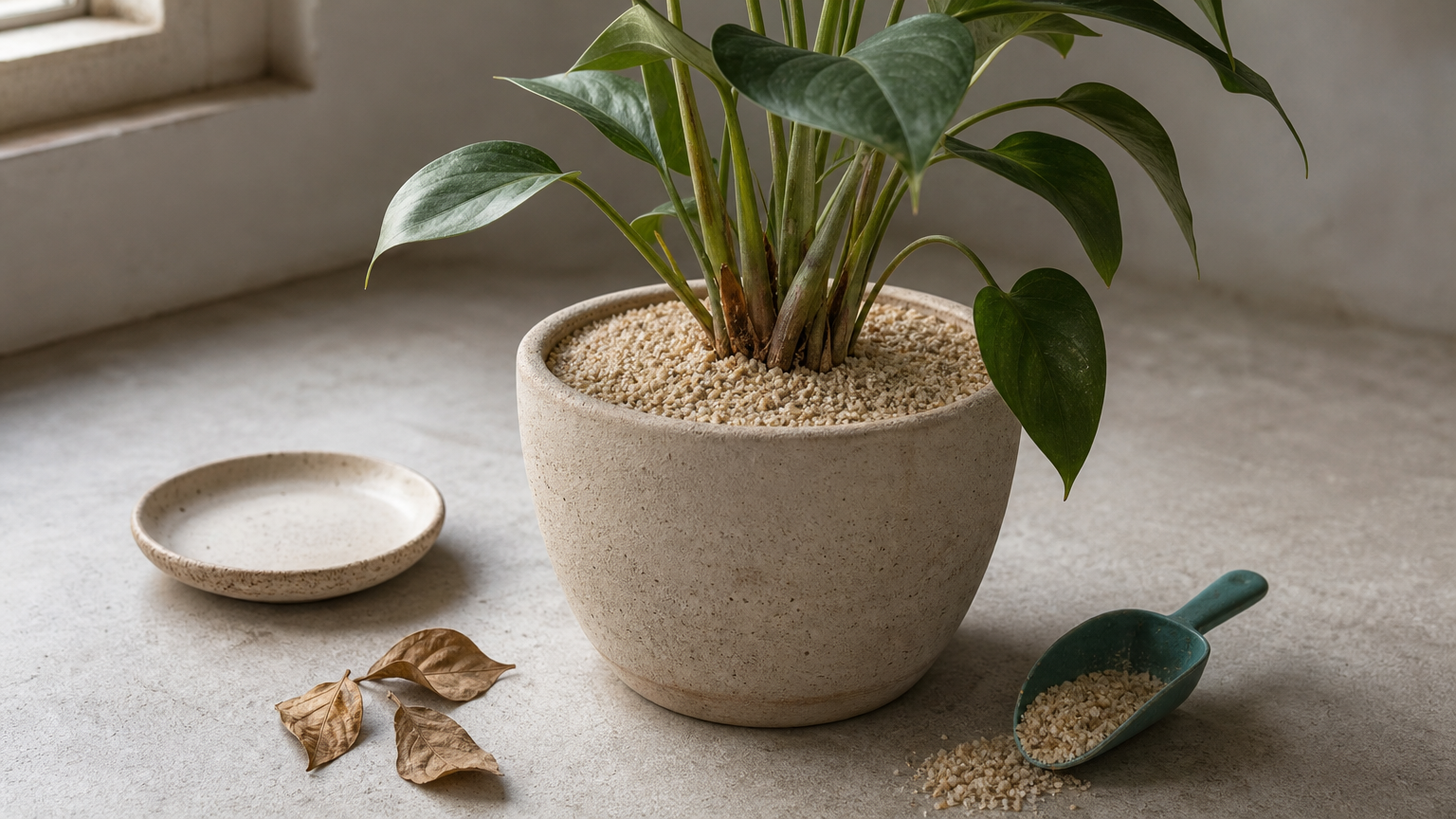
Expect this step to take three to four weeks to bring the population under control on its own. Pair it with the next two steps to speed things up.
A dry soil surface removes the egg-laying site, and no spray beats that.
Step 2. Trap the adults
Traps catch the flying adults before they lay more eggs, and they show you whether your treatment is working. Use them in every infested pot.
Set yellow sticky traps
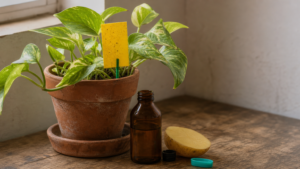
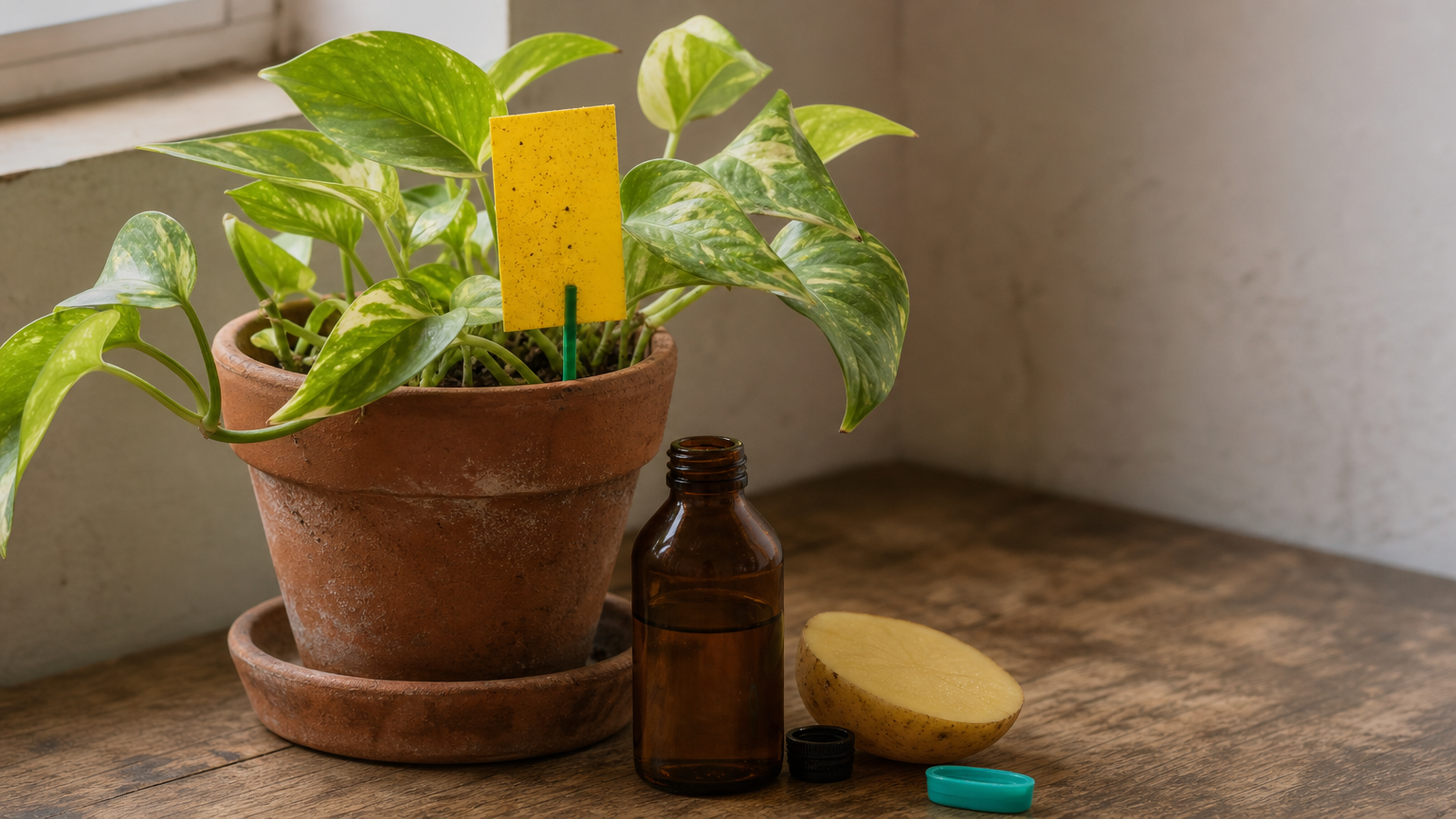
Push a yellow sticky card on a stake into the soil, with the card near the leaves and the soil surface. Use one per pot, or one per small cluster of pots. Replace a card once it’s covered with insects.
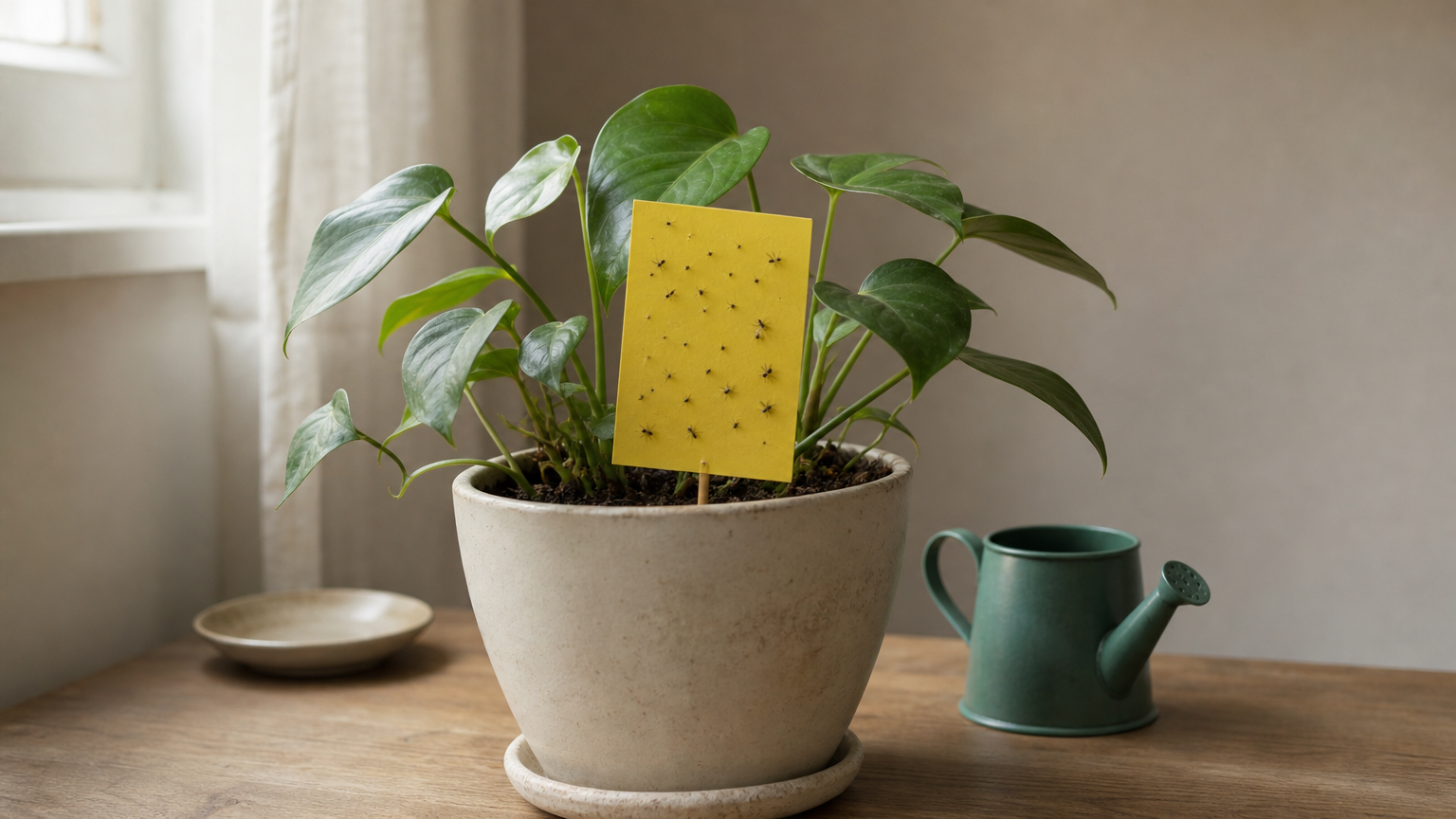
Count the gnats on each card weekly. Falling numbers tell you the larvae treatment is working. Small LED light traps with a sticky card also catch adults, if you want a tidier look.
Find the infested plants with a potato slice
Lay a slice of raw potato cut side down on the soil. Check it after three to four days. Larvae come up to feed on the starch, so a few pale worms on the underside mean that pot is infested. With many plants, this shows you which ones to treat first.
What kills gnats instantly
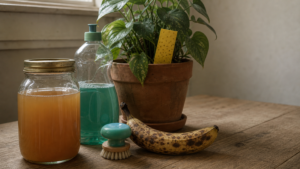
Nothing kills every stage instantly. Sticky traps and a quick swat handle adults on contact. An indoor pyrethrin spray labeled for houseplants gives only temporary relief, and you should aim it at the plant and soil surface, since spraying the air does nothing. Vinegar traps are for fruit flies and don’t work well on fungus gnats.
Traps stop new eggs and measure your progress, but only the soil treatment ends the cycle.
Step 3. Kill the larvae in the soil
Larvae live in the pot, so this is where you end the infestation. Choose Bti, a peroxide drench, or both on different waterings.
Treat with Bti
Bti (Bacillus thuringiensis israelensis) is a bacterium that kills fungus gnat larvae. You can buy it as Mosquito Bits or Gnatrol. Follow the package directions and water enough that it filters down to the larvae.
Bti doesn’t touch eggs, pupae, or adults, so a single dose is never enough. Reapply as the label directs until the sticky cards stay clean.
Use a hydrogen peroxide drench
Mix 1 part 3% hydrogen peroxide with 10 parts water, for example 1 cup of peroxide to 10 cups of water. Pour it on the soil in place of a regular watering. It fizzes and kills larvae on contact.
Use it on the soil only, not as a leaf spray. Try one plant first and watch it for a day or two, especially with seedlings or delicate plants. Dish soap drenches are a poor choice. They can irritate roots and don’t reliably reach every stage.
Repot only when it’s severe
If the soil is mushy, smells sour, or the plant is declining, repot into fresh potting mix. Rinse the roots gently, remove any soft brown ones, and bag the old soil and throw it away outside. You rarely have to throw out the plant itself.
Bti or peroxide kills larvae, but only repeated treatments catch the generations that hatch later.
Step 4. Stop them from coming back
Prevention comes down to routine and a few habits. The gnats return when the soil stays damp or when new infested material enters your home.
Follow a four-week schedule
Because egg to adult takes three to four weeks, run the full routine for at least four weeks:
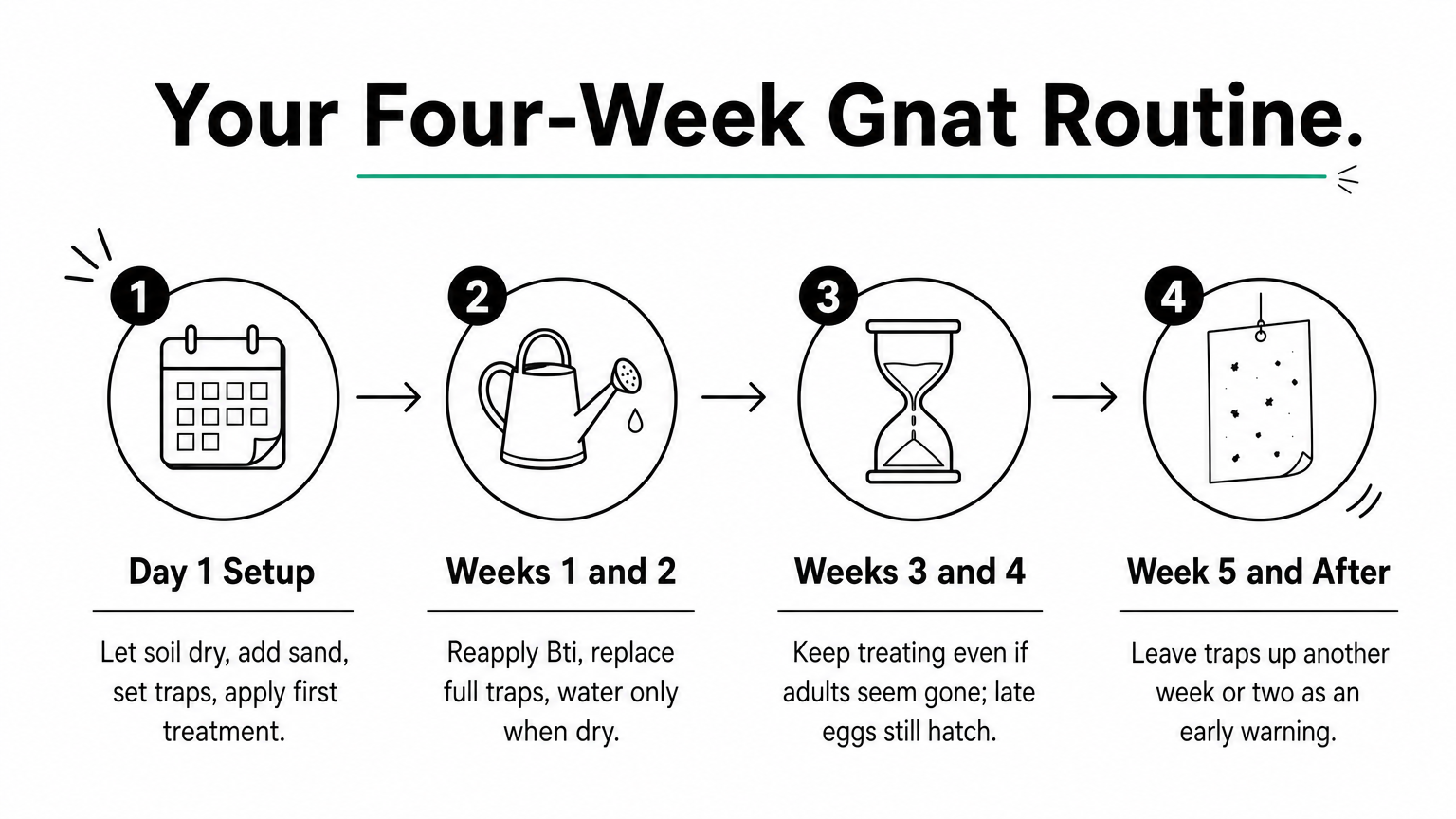
- Day 1: Let the top inch dry, add the sand or gravel layer, set sticky traps, and apply the first Bti or peroxide treatment.
- Weeks 1 and 2: Reapply Bti as the label directs, replace full traps, and water only when the surface is dry.
- Weeks 3 and 4: Keep treating even if the adults seem gone, since late eggs are still hatching.
- Week 5 and after: Leave traps up for another week or two as an early warning.
Block new infestations
Keep new plants apart from your collection for about two weeks and check the soil surface and trap cards. Use fresh potting mix, and keep opened bags sealed and dry. Plants that spent summer outdoors are a common source in fall, so inspect them and let the soil dry before bringing them in.
Handle office plants
In an office, fungus gnats usually come from overwatering because nobody tracks who watered what. Put one person in charge, empty saucers, and pick a stake-style sticky trap for each pot. Skip decorative pots without drainage holes, since they hold water at the bottom.
Gnats are a watering problem more than a bug problem, so fix the watering and they leave.
Keep at it until the cards stay clean
To get rid of fungus gnats, dry the soil surface, trap the adults, treat the larvae, and repeat for four weeks. You don’t need to throw the plants away. The routine works because it hits every stage of the life cycle.
Check the sticky cards weekly and keep the watering habits long after the flies disappear. For more step-by-step help with bugs around the house, browse the pest control and cleaning guides at Home The Spruce.