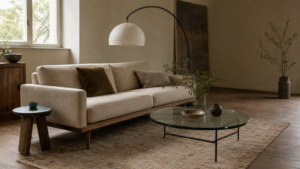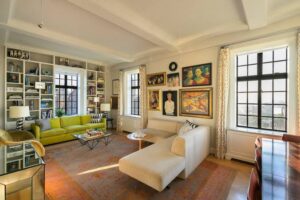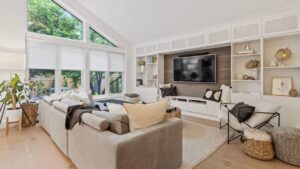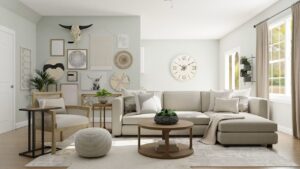
The best living room furnishing ideas start with the room, not the shopping list. Set a layout around one focal point, buy seating that fits the space, anchor it with a right-sized rug, then add lighting, storage, art and texture in that order. Do that and almost any style works. Idea 3 suits readers torn between styles, idea 7 suits families fighting clutter, and idea 10 suits anyone with a small room.
Most people get stuck because a living room does too many jobs. It hosts guests, TV nights, homework and naps, and every product photo looks great on its own. Buy piece by piece without a plan and you end up with a rug that is too small and a sofa that blocks the door.
This article gives you ten ideas to furnish and decorate a living room. Each one has the same three parts: why it works, how to do it with real measurements, and who it suits. Home The Spruce writes decorating and buying guides for homeowners and renters, so every idea assumes a normal budget and walls you cannot move.
1. Start with a layout built around a focal point
Why it works
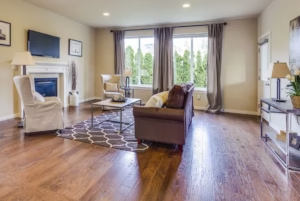
A layout decides every purchase that follows. Choose one focal point, such as a fireplace, a large window or the TV wall, and point your main seating toward it. Furniture that faces something looks intentional, while furniture pushed against every wall looks like a waiting room.
Conversation matters as much as the view. Seats placed within roughly 8 feet of each other keep people talking at a normal volume, so pull the sofa off the wall whenever the room allows it.
Pick the focal point first, then let the sofa, chairs and TV answer to it.
How to do it
Measure the room, then sketch it on paper with doors, windows and vents marked. Use these clearances as fixed rules while you move pieces around on the sketch:
- 30 to 36 inches for main walkways
- 14 to 18 inches between the sofa and the coffee table
- A clear path from the door to the seating, not through the middle of the conversation area
- Screen center near seated eye level if the TV is a focal point
Best for
Every room, which is why this idea comes first. It matters most in open-plan spaces, where a sofa with its back to the dining area marks the living zone without needing a wall.
The classic mistake is centering everything on the TV by default. If the room has a fireplace or a view, treat the screen as a second focal point and keep it off the main axis.
2. Choose seating that fits the scale of the room
Why it works
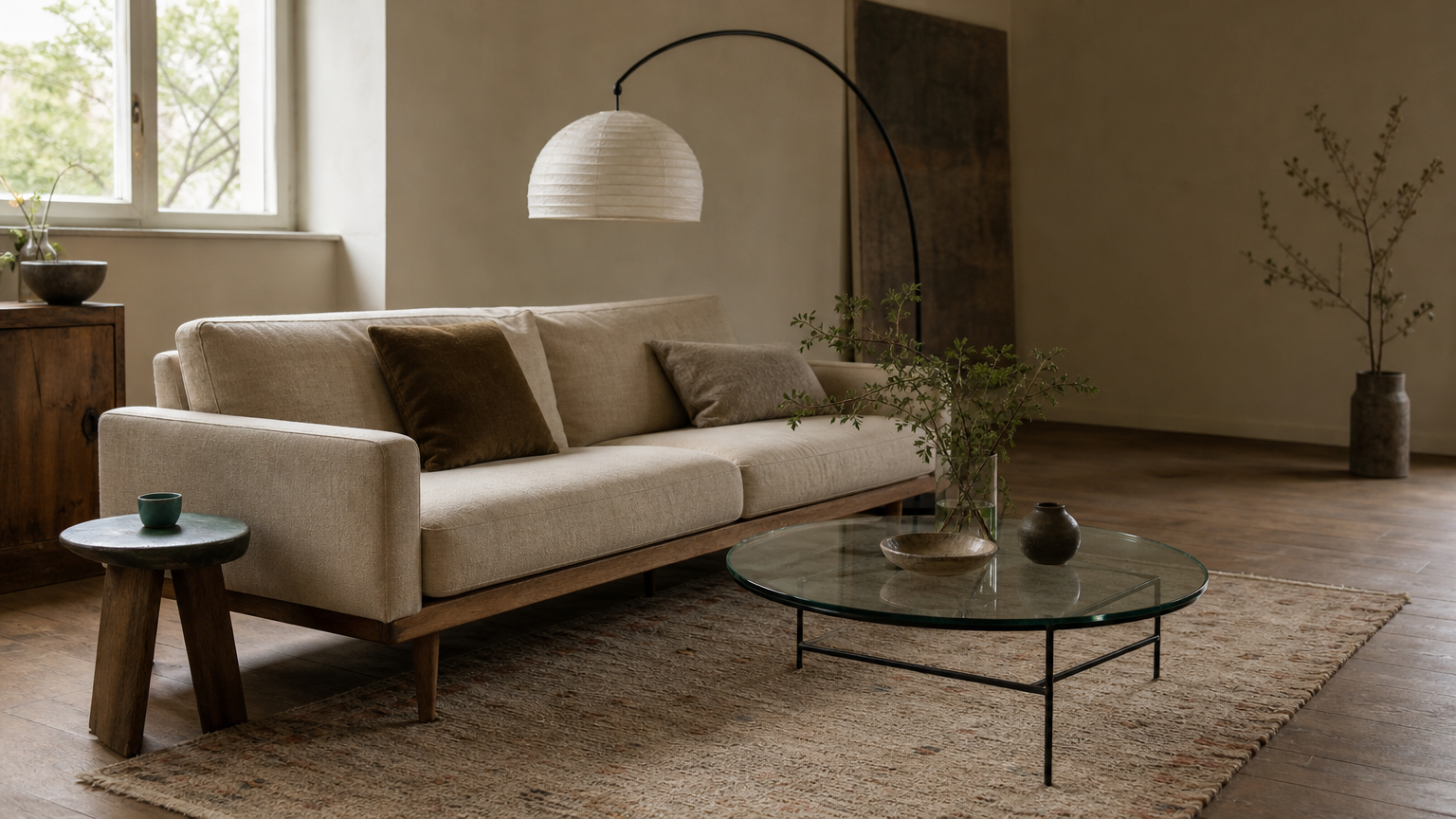
Seating sets the visual weight of the whole room, so size it to the space before you buy anything else. Low-back, lounge-style sofas keep sight lines open, and one large sofa often looks calmer in a small room than three small pieces breaking it up.
Comfort is the other half of the decision. Sit on any sofa for ten minutes before buying, and check the overall depth: roughly 36 to 40 inches suits lounging, while 32 to 35 inches suits upright sitting.
Buy the sofa for the room you have, not for the showroom where you first saw it.
How to do it
Start with the sofa, then add chairs around it. This sizing guide covers most rooms:
- Small room: a 72 to 80 inch sofa or loveseat on raised legs, so you can see floor underneath
- Medium room: an 84 to 90 inch sofa plus one or two accent chairs
- Large room: a sectional, or a sofa with a pair of armchairs facing it
- Homes with kids or pets: performance fabric that is washable and stain-resistant
Best for
Small-space dwellers should favor low profiles and exposed legs. Larger rooms can handle a curved sofa or a sectional that doubles as a divider between living and dining areas.
Skip oversized recliners that block a walkway. A swivel chair or a chaise gives the same comfort in a smaller footprint, and a sofa bed saves you a dedicated guest room if the space does double duty.
3. Pick a theme and a three-color palette
Why it works
A theme is a filter. Without one, every sofa, lamp and pillow looks equally good, and the room ends up a pile of unrelated choices. A simple theme narrows hundreds of products to a few, and a tight palette makes the pieces look like they belong together.
Light shades make a room feel larger, while deeper tones feel cozy and enclosed. Warm neutrals and muted greens read as timeless in most homes, so they are a safe base if you plan to stay a while.
Choose the theme by how you live, then let three colors do the rest.
How to do it
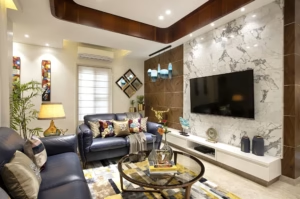
Build the palette with the 60-30-10 rule. Use 60 percent main color (walls, large rug), 30 percent secondary color (sofa, curtains) and 10 percent accent (pillows, art, vases). The table shows five common themes and what defines each.
| Theme | Palette | Furniture and decor cues |
|---|---|---|
| Modern | White, charcoal, one bold accent | Clean lines, low sofa, metal and glass |
| Farmhouse | Cream, sage, warm wood | Slipcovered sofa, wood table, ceramic vases |
| Bohemian | Terracotta, mustard, deep green | Layered rugs, rattan, plants, mixed patterns |
| Traditional | Navy, burgundy, warm neutrals | Rolled arms, wood tones, symmetrical pairs |
| Scandinavian | Soft white, pale gray, light wood | Simple shapes, wool throws, natural fibers |
Best for
Undecided readers should pick one theme and borrow a single piece from another, such as a rattan chair in a modern room. That keeps the room personal without turning it into a mix of everything.
Avoid buying a matching suite in one go. Designers increasingly mix furniture from different sources, because a room assembled over time looks collected rather than ordered from a catalog.
4. Anchor the seating with a right-sized rug
Why it works
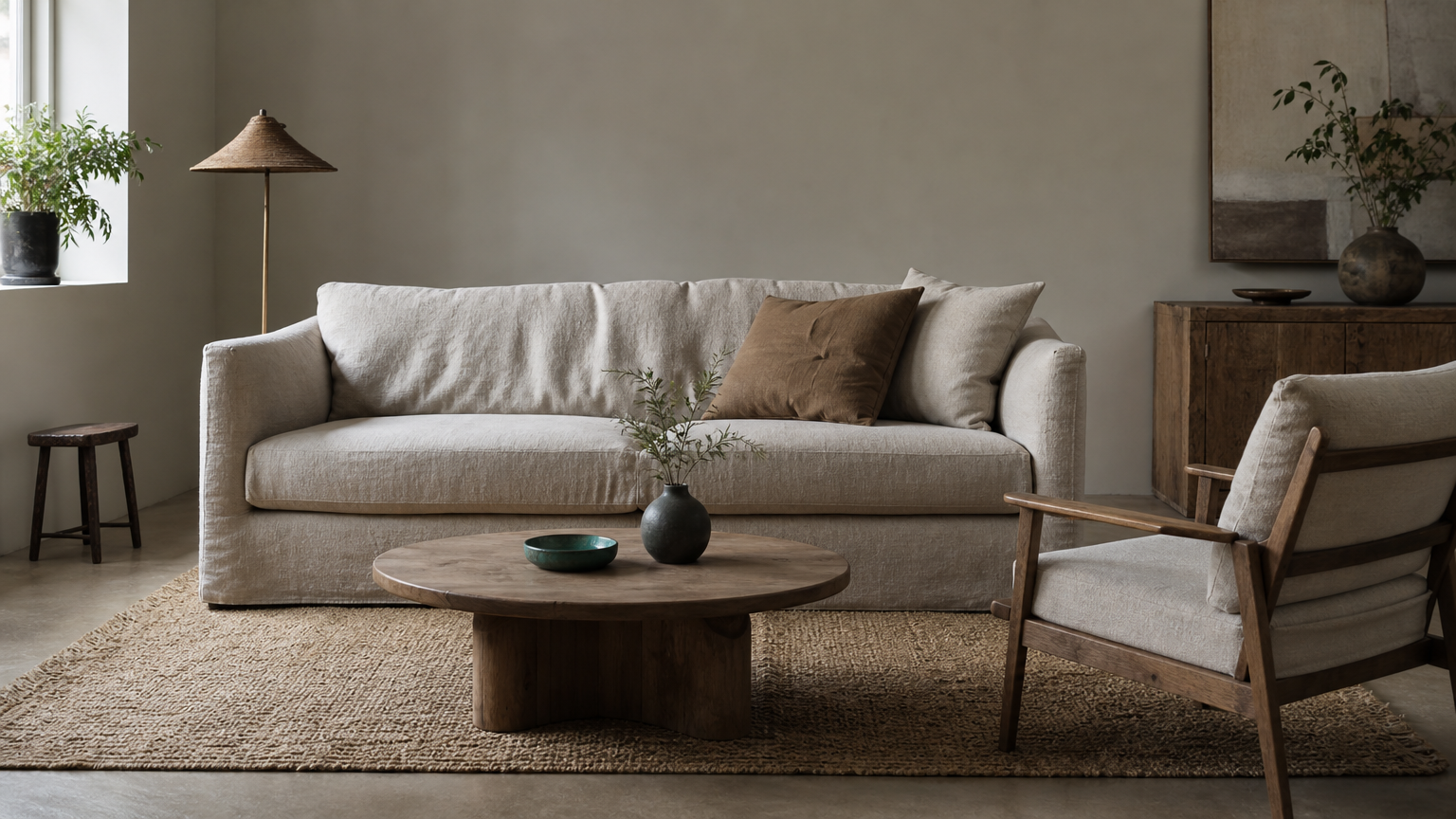
A rug marks the seating zone, adds warmth underfoot and softens echo in a room with hard floors. A rug that is too small is the single most common reason a living room looks unfinished or dated, because the furniture seems to float with no connection to anything.
The rule is simple. At minimum, the front legs of the sofa and every chair should rest on the rug, and ideally all legs should.
A rug sized to the seating group makes the whole arrangement read as one unit.
How to do it
Work through the numbers before you shop. In a 12 by 15 foot room, an 8 by 10 rug leaves about 2 feet of bare floor on each side and 2.5 feet at each end, which is the proportion most designers aim for. Use this as a starting guide:
- 5 by 8 feet: small rooms or a single chair-and-sofa grouping
- 8 by 10 feet: the standard choice for medium living rooms
- 9 by 12 feet or larger: big rooms or open-plan layouts
- Low pile or flat weave: easier for vacuums, chairs and rolling toy cars
Best for
Renters get the most from this idea, because a good rug covers worn floors and costs far less than refinishing. Pair it with a rug pad so it stays flat and does not creep.
Never buy a rug before you know your sofa size and layout. Order after you have settled on seating, and tape the rug outline on the floor with painter’s tape for a day to check how it feels.
5. Mix your tables and size the coffee table well
Why it works
Tables carry the drinks, books and remotes that make a living room useful. They also break up all the upholstery, so mixing a wood coffee table with a metal or glass side table keeps the room from feeling heavy or matched.
Proportion matters more than style. A good coffee table is about two-thirds the length of the sofa, which leaves room to walk around its ends.
Size the coffee table to two-thirds of the sofa and the rest falls into place.
How to do it
Here is a worked example. For an 84 inch sofa, shop for a coffee table near 56 inches long, set 14 to 18 inches from the seat edge. Then add side tables with these simple rules:
- Side table height level with, or just below, the sofa arm
- A round or oval coffee table in tight walkways, so nobody bumps a corner
- Glass or acrylic tables in small rooms, because they remove visual weight
- A storage ottoman in place of a table when you need a footrest and a tray
Best for
Families with young kids should pick rounded edges and an upholstered ottoman. Entertainers do better with a long table and a set of nesting side tables that pull out when guests arrive.
Do not buy the matching table set sold with a sofa. A mixed pair of tables in different heights looks more personal, and it costs about the same.
6. Layer three kinds of lighting
Why it works
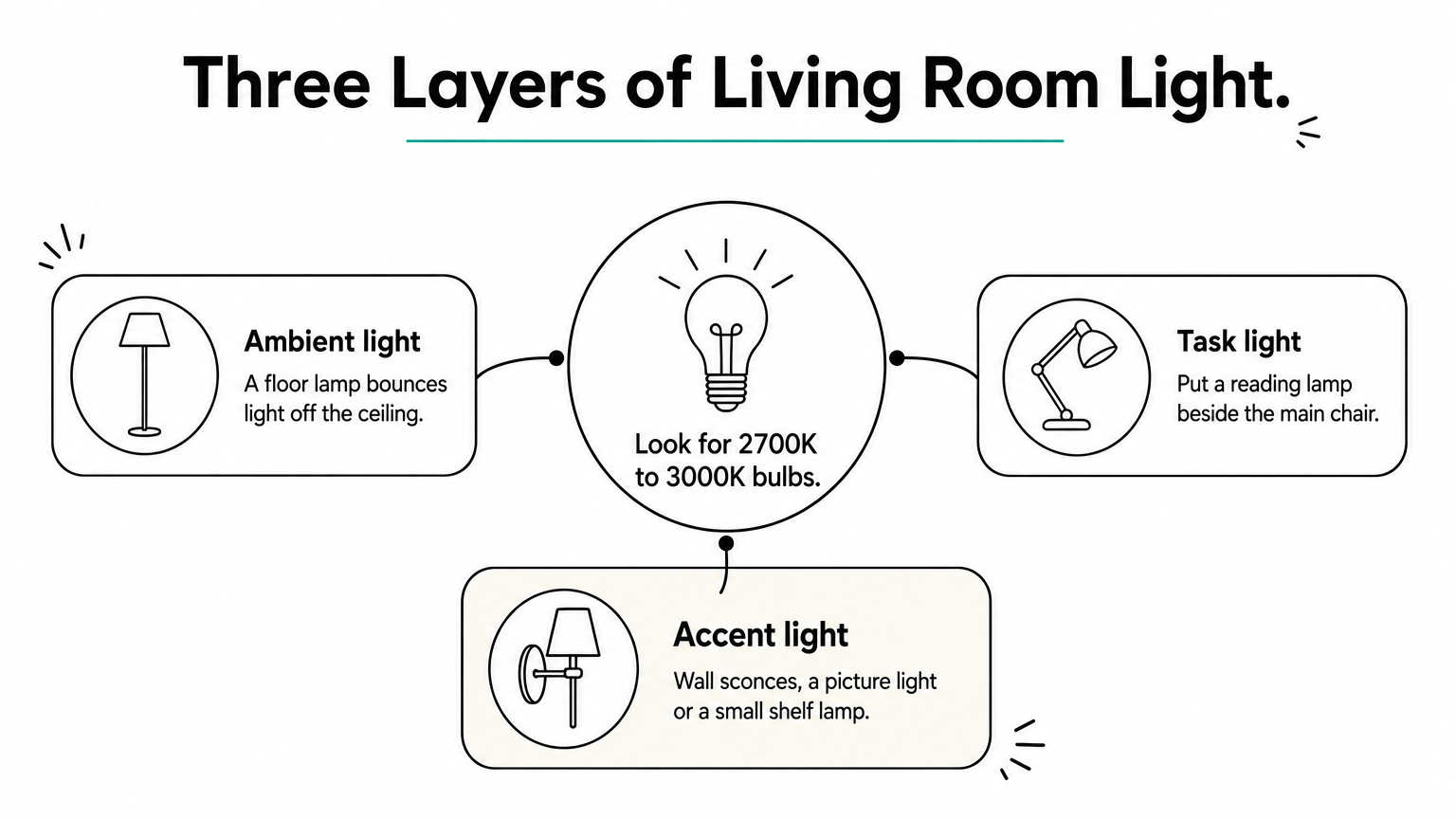
One ceiling light flattens a room and casts hard shadows. Designers layer ambient, task and accent light, so the room feels soft in the evening and still works for reading. Cool bluish bulbs make a living room feel clinical, so pick warm ones.
The easiest upgrade is bulb color. Look for 2700K to 3000K on the package, which gives a warm white glow that flatters wood, fabric and skin.
Replace one overhead light with three lower sources and the room changes at once.
How to do it
Add one source from each layer, then put the overhead light on a dimmer if you can. Plan your lighting like this:
- Ambient: a floor lamp that bounces light off the ceiling, or a ceiling fixture on a dimmer
- Task: a reading lamp beside the main chair, with the shade bottom at eye level when you sit
- Accent: wall sconces, a picture light or a small lamp on a shelf
- Renters: plug-in sconces and table lamps need no electrician
Best for
Evening TV rooms gain the most, because low lamps reduce glare on the screen and let you dim the room without sitting in the dark. Readers with a dark room get a boost too, since lamps add light without painting a wall.
Skip a ceiling full of recessed cans as the only light source. They look flat and are poor for conversation, so use them as background light and let lamps do the work.
7. Add storage that hides clutter
Why it works
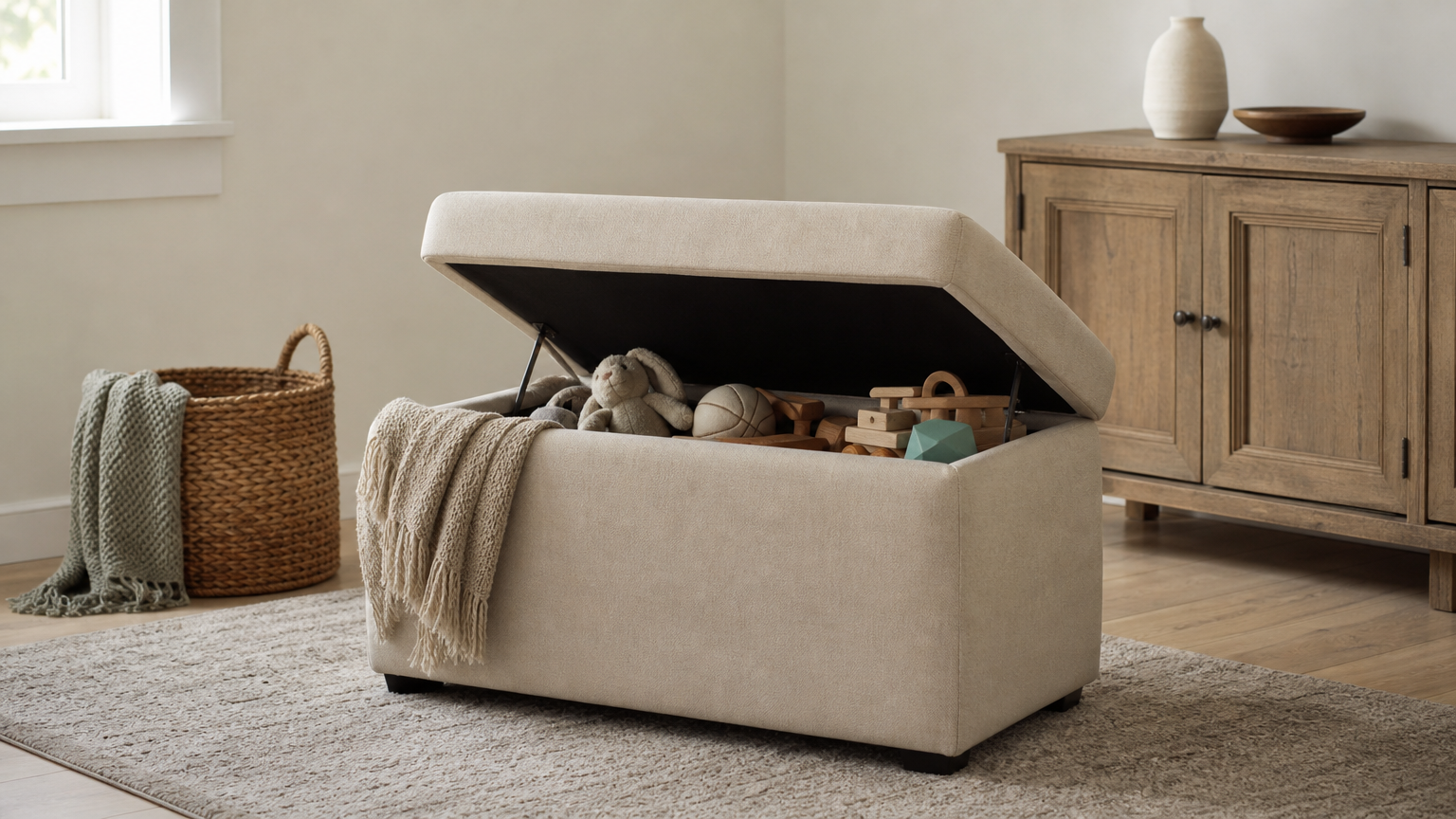
Clutter undoes even the best furniture, and most living rooms hold more stuff than anyone plans for. Good storage hides the daily mess like remotes, toys and throws, while keeping a few chosen objects on display.
Closed storage matters most in small rooms. If everything you own sits on open shelves, the room looks busy, so keep display shelves only partly filled with space around each object.
Hide the everyday items, display a few good ones, and the room stays calm.
How to do it
Pick storage that works as furniture first. These choices earn their footprint:
- A storage ottoman for toys, blankets and game controllers
- A closed-door media console instead of an open stand
- Built-in bookshelves around the TV or fireplace, which also add depth to the wall
- Decorative baskets, such as scalloped storage baskets from our Home Trends collection, tucked under a console or beside the sofa
Best for
Families with kids benefit most, since a lidded ottoman swallows an entire toy collection in seconds. Renters can get a built-in look with tall, closed bookcases anchored to the wall.
Avoid cramming open shelves edge to edge. Leave breathing room on each shelf, and group objects by height so the eye has somewhere to rest.
8. Hang art and mirrors at the right scale
Why it works
Walls are the largest unused surface in the room, and bare ones make a space feel unfinished. Art sets the mood, and a mirror opposite a window doubles the daylight. Scale is the whole trick, since small art on a big wall looks lost.
Use the two-thirds rule again. Art over a sofa should be roughly two-thirds to three-quarters of the sofa width.
Match art to the furniture below it, and the wall will look planned.
How to do it
For an 84 inch sofa, that means artwork or a grouped arrangement between 56 and 63 inches wide. Then follow these hanging rules:
- Hang the center of the piece about 57 inches from the floor
- Leave 6 to 8 inches between the bottom of the frame and the sofa back
- Keep 2 to 3 inches between frames in a gallery wall
- Use one large piece when floor space is limited, because it adds drama without clutter
Best for
Renters who cannot drill much should use picture ledges or removable hanging strips rated for the frame weight. Small rooms gain more from a single oversized piece than from many small ones.
The usual error is hanging art too high. If you have to look up to see it, lower it, because art relates to the furniture, not the ceiling.
9. Finish with texture, curtains and a few accessories
Why it works
Texture is what separates a furnished room from a lived-in one. A room with only smooth surfaces feels flat, so mix wool, linen, velvet and woven fibers in a restrained palette. These decor ideas for a living room cost the least and change the most.
Group objects in odd numbers. The 3-5-7 rule says groups of three, five or seven look more natural than pairs, so vary the heights and shapes.
Layer textures in a calm palette and the room feels finished without feeling busy.
How to do it
Work from the largest layer down to the smallest. These are the finishing touches that matter most:
- Curtains hung near the ceiling and long enough to touch the floor, which makes windows look taller
- Two or three pillows in related patterns, with a throw in a basket nearby
- A vintage ceramic vase set from our Home Decor collection, plus artificial greenery from our Home Trends collection, for shelves and mantels
- A reed diffuser on a shelf or console for a quiet scent without a flame
Best for
Budget shoppers should start here, since new accessories refresh a room without new furniture. People who dislike plant care can use artificial greenery for the same soft shape.
Dated rooms usually share the same traits: an undersized rug, a matching furniture suite, one harsh overhead light, bare or short curtains and scattered knickknacks. Fix those and you have removed most of the dated look.
10. Scale every idea to your room size
Why it works
The same ideas work in any room if you change their size. A small room needs fewer, lighter pieces, while a large room needs zones so furniture does not drift into the middle. Choosing by room size also keeps you from copying a photo that only works in a loft.
Small rooms get the most from light and height. Light walls, curtains hung high and a mirror across from a window make a compact space feel larger without moving a wall.
Keep the ideas, change the scale, and the same plan fits a studio or a great room.
How to do it
Measure your floor area, then use this rough comparison to set your targets. Treat the numbers as guides, not hard limits.
| Small (under 150 sq ft) | Medium (150 to 250 sq ft) | Large (over 250 sq ft) | |
|---|---|---|---|
| Seating | Loveseat or 72 to 80 inch sofa, one chair | 84 to 90 inch sofa, two chairs | Sectional, or sofa plus chair pair |
| Rug | 5 by 8 feet | 8 by 10 feet | 9 by 12 feet or larger |
| Color | Light walls, or one color on walls, trim and ceiling | Two-tone palette with accents | Deeper tones, contrast between zones |
| Tables | Round or glass coffee table | Coffee table plus two side tables | Large ottoman or two coffee tables |
| Lighting | Sconces and one floor lamp | Two lamps plus one dimmed overhead | Lamps in every seating zone |
Best for
Apartment dwellers will lean on the small column, where multi-use pieces like a sofa bed or nesting tables earn their keep. Owners of big rooms should build two or three zones with separate rugs and lighting.
The mistake in both cases is furniture that ignores scale. A tiny sofa in a huge room looks lost, and an oversized sectional in a small room blocks the walkway, so measure before you buy.
Where to begin in your own room
Good living room furnishing ideas follow an order. Fix the layout and focal point, choose seating that fits, set a palette, add a rug that is large enough, then work in tables, lighting, storage, art and texture. Every idea above works because it respects scale, and scale is what separates a room that feels designed from one that feels assembled.
You do not need to do all ten at once. Measure the room, sketch the layout, and spend your first budget on the sofa and rug. The lamps, art and accessories can follow over a few months, and the room will look better at every stage.
If you want more practical design help, browse more home design guides from Home The Spruce for decorating ideas, buying advice and step-by-step projects you can finish yourself.