Meta Title:
Meta Description: Learn when item anti shield lol matters, which champions use it best, and how to beat shield-heavy comps without wasting gold or tempo.
Slug: item-anti-shield-lol
Tags: League of Legends, LoL items, anti shield lol, Serpent’s Fang, Shadowflame, shield counter, LoL builds, champion matchups, ranked guide, itemization guide
Introduction
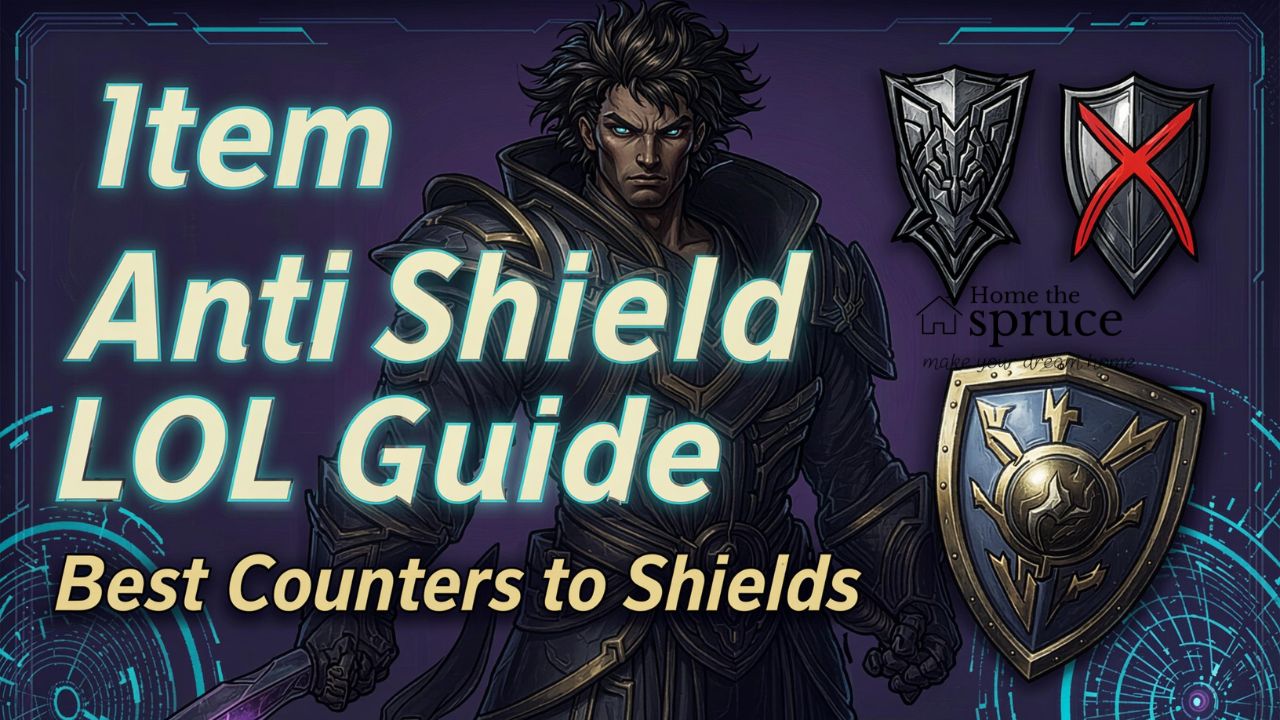
Few things in League of Legends feel worse than watching a perfect trade turn into nothing because a huge shield erased all your damage. That is exactly why item anti shield lol has become such an important search for players who want cleaner fights, smarter buys, and fewer frustrating losses.
If you play against champions like Lulu, Janna, Karma, Ivern, Sett, Tahm Kench, or anyone abusing shield-heavy setups, itemization can decide the game before the next team fight even starts. A lot of players know they need “something” against shields, but they are not always sure what that item is, when to buy it, or whether it is worth delaying core damage.
This guide breaks that down in a practical way. You will learn what anti-shield itemization really means in League of Legends, which item usually matters most, when it is strong, when it is bait, and how to think about shield-heavy drafts without overcomplicating your build.
Suggested image: A League of Legends team fight showing shields absorbing burst damage
What item anti shield lol really means
When players search for item anti shield lol, they are usually looking for an item that reduces the value of enemy shields rather than simply dealing more raw damage. In the current item pool, Serpent’s Fang remains the clearest dedicated anti-shield item, while Shadowflame is often discussed alongside shield matchups because it can help burst through fragile targets, though it works differently. League of Legends item lists also show both Serpent’s Fang and Shadowflame as active legendary options.
That distinction matters. A true anti-shield item directly attacks the shield mechanic. A shield-punishing damage item simply helps you finish targets faster. If you confuse those two ideas, you can spend gold on the wrong answer and still lose fights you should have won.
The difference between reducing shields and out-damaging them
Shield reduction means the enemy’s protective layer becomes weaker or less effective. That is why Serpent’s Fang has such a specific reputation. On the League wiki’s shield page, it is listed under effects that negatively impact shields, with a note that it does not apply to magic damage shields.
Out-damaging shields is different. That approach says, “I cannot stop the shield itself, so I will stack enough threat to make it irrelevant.” This can work, but it depends on timing, champion kit, and team comp. If the enemy has repeated shielding from multiple sources, raw damage alone often feels unreliable.
The main anti-shield item you should know
For most players, the answer to item anti shield lol starts with Serpent’s Fang. It is a legendary item in League of Legends, built from Serrated Dirk, and it sits in the AD assassin space with armor penetration-related value.
That alone should already tell you something important. Serpent’s Fang is not a universal item. It is not built naturally by every class. It makes the most sense when your champion already wants lethality-style components, fast threat windows, and burst-oriented item paths.
Why Serpent’s Fang matters so much
The reason Serpent’s Fang stays relevant is simple: shields are often strongest when they buy time. A shield does not just block damage. It delays kill pressure, stalls cooldown trades, and lets the enemy survive long enough for peel, healing, or repositioning.
So when you reduce shield value, you are not only cutting durability. You are also taking away time, and time is often what saves people in League.
Champions that like Serpent’s Fang
Serpent’s Fang usually feels best on champions that already want lethality or aggressive AD itemization. That includes many assassins and some AD skirmishers or poke-oriented picks depending on the match. Because it builds from Serrated Dirk, it fits more naturally into those paths than into bruiser or crit setups.
Common users often include:
- Zed
- Talon
- Qiyana
- Kha’Zix
- Pyke
- AD support or roaming picks in rare shield-heavy games
- Certain marksmen only in very niche situations
That last point is important. Just because an item is good against shields does not mean it is good on your champion.
Suggested image: Build path graphic highlighting Serpent’s Fang from Serrated Dirk
Is Shadowflame an anti-shield item too?
A lot of people ask this because Shadowflame has long been associated with hitting shielded targets. It is still a legendary mage item, and it often comes up in the same conversation as anti-shield choices.
But if you want a clean answer, Shadowflame is not the same kind of answer as Serpent’s Fang. It is not the go-to item for directly reducing shield value in the way most players mean when they search item anti shield lol. Instead, it is better understood as a damage-oriented option that can help mages pressure shielded enemies more effectively in the right context.
When Shadowflame is worth considering
Shadowflame makes more sense when:
- You are a mage who already wants AP burst
- Your target is squishy
- The enemy team relies on lighter shielding rather than massive layered shielding
- You want kill pressure without ruining your build path
If you are playing a burst mage and wondering whether to copy an assassin-style anti-shield buy, the answer is usually no. You should keep your class identity in mind.
Why players get confused here
Players often mix up three different goals:
- Reduce the shield
- Punch through the shield
- Kill the target after the shield expires
Those are not the same thing. The right choice depends on who you are playing, who you are trying to kill, and whether the enemy shields are coming from one champion or several.
When buying item anti shield lol is actually the right move
Not every game with one shielding champion needs a special answer. If the enemy support picked Lulu but she is behind, dies early, or only shields one fed target once per fight, you may not need to twist your build around it.
The purchase becomes much stronger when shields are central to how the enemy wins fights.
Buy it when shields are part of the enemy win condition
Look for these signs:
- The enemy comp has multiple shield sources
- Their carry survives every engage by a sliver
- Your burst windows are being denied over and over
- Fights are decided by peel and protection, not front-to-back damage
- Their support or enchanter is clearly the engine of the team
This is where item anti shield lol stops being a niche search and becomes a real game-winning decision.
Examples of shield-heavy enemy comps
You should strongly consider anti-shield planning when facing combinations like:
- Hypercarry plus enchanter
- Dive bruiser with self-shield and backline support shields
- Poke comp with constant disengage and peel
- Double enchanter styles in uncoordinated solo queue games
- Protect-the-carry drafts built around one fed threat
Against these setups, every failed kill attempt gives the enemy confidence and space. The right item can completely change how safe their carries feel.
When it is a trap to buy anti-shield
This is where many players throw games. They see one annoying shield, panic-buy a counter item, and delay the core purchase that actually lets their champion function.
An item is only strong when the champion can use it well and the game state rewards it.
Bad reasons to buy it
Avoid forcing anti-shield itemization when:
- Only one enemy champion has a small or occasional shield
- Your champion does not scale well with the item
- You are already behind and need core damage first
- The enemy wins through tankiness, not shielding
- The target with shields is not the one you are actually hitting
That last one happens a lot. Players buy anti-shield tools to deal with the enemy ADC’s support, but in real fights they spend most of their time hitting the frontline. In that case, the item may do far less than expected.
Opportunity cost matters
Every item slot has a price beyond gold. It also costs tempo, spike timing, and build efficiency. A perfect counter item purchased on the wrong champion can still be a bad item.
So if you are asking whether item anti shield lol is worth it, the better question is this: does this buy help my champion win the next two important fights more than my normal core item would?
If the answer is no, skip it.
Suggested image: Infographic comparing ‘Good anti-shield buy’ vs ‘Bad anti-shield buy’ scenarios
Best roles for anti-shield itemization
Different roles think about shields differently. The same enemy draft may require very different responses depending on your job.
Assassins
Assassins are usually the most natural users of true anti-shield itemization because they need targets to die during short windows. If shields block that burst, their entire identity gets weaker.
That is why Serpent’s Fang fits them so well. It protects the purpose of the class.
Marksmen
Marksmen need to be more careful. In very specific games, an anti-shield purchase can make sense, especially if shielded carries keep escaping your damage. But marksmen usually depend on strict scaling paths. If you delay a stronger crit or attack-speed spike for a situational answer, you can hurt your own consistency.
For most ADC players, positioning and target selection matter more than forcing a niche counter buy.
Mages
Mages usually do not want to imitate AD anti-shield paths. They should think in terms of damage profile, burst timing, and whether AP itemization already solves the problem. Shadowflame often enters the conversation here because it can help punish fragile targets in shielded environments, but it is still a mage damage item first, not a universal shield-removal tool.
Supports
Supports can influence anti-shield fights without always buying the item themselves. Sometimes the smarter play is timing crowd control on the shielding champion, breaking positioning, or forcing the shield before the real engage happens.
A good support often beats a shield comp through timing rather than shopping.
How to play around shields even without the item
You do not always need a special purchase to beat shields. Sometimes the best counter is cleaner decision-making.
Force shields early
A lot of players dump everything at once into a target that still has peel available. Better players bait the shield first, disengage for a second, then re-engage when the enemy protection is gone.
This turns a frustrating fight into a cooldown check instead of a stat check.
Hit the shield source, not only the shielded carry
If Lulu, Janna, Karma, or Ivern is controlling the fight, sometimes the real answer is to threaten them first. Once the shield engine is under pressure, the protected carry becomes much easier to kill.
In solo queue, players often tunnel on the fed target and ignore the enabler. That makes shield comps look stronger than they are.
Track item spikes and summoner spells
Shield-heavy teams feel unbeatable when they stack shields with Exhaust, Heal, barrier-style effects, and disengage. But those tools are all less scary once you know what is actually available.
Before the next dragon fight, ask:
- Is the enchanter flashless?
- Has the shield cooldown been used?
- Does the carry still have defensive summoners?
- Is the anti-shield user strong enough to threaten backline access?
Good answers to those questions matter more than blind aggression.
Common mistakes players make with item anti shield lol
The phrase item anti shield lol sounds straightforward, but the gameplay mistakes around it are very common.
Mistake 1: Buying it too late
If the enemy comp is clearly built around shields and you only adapt after three failed fights, the game may already be slipping away. Counter buys are strongest when they arrive before the matchup becomes unplayable.
Mistake 2: Buying it on the wrong player
Your team may need anti-shield value, but that does not mean you personally should be the one to provide it. Sometimes the best buyer is the assassin, not the ADC. Sometimes it is better to ask whether your most reliable backline threat can fit it naturally.
Mistake 3: Expecting it to fix bad execution
A counter item does not replace clean target access, timing, or mechanics. If your team engages without vision, splits focus, or blows cooldowns into the wrong target, no purchase will save that.
Mistake 4: Ignoring shield type and context
The League wiki notes that Serpent’s Fang does not apply to magic damage shields. That detail alone is enough to remind players that shield interactions are not always as simple as “buy this and win.”
Context always matters.
FAQ
What is the main item anti shield lol players build?
For most games, the main dedicated anti-shield choice is Serpent’s Fang. It is the clearest item specifically associated with negatively impacting shields and is listed as a legendary item in League of Legends.
Is Serpent’s Fang good in every game with shields?
No. It is strongest when shields are central to the enemy comp and when your champion can naturally use a lethality-style item path.
Is Shadowflame the same as Serpent’s Fang?
No. Shadowflame is often mentioned in shield-related discussions, but it is not the same kind of direct anti-shield answer. It is better viewed as an AP damage option that can still help in some shield matchups.
Should ADCs always buy an anti-shield item?
Not always. ADCs usually need to protect their core scaling. In many games, better positioning and target choice will matter more than forcing a situational purchase.
Can supports counter shields without buying anti-shield items?
Yes. Supports can bait cooldowns, pressure the shielding champion, chain crowd control, or force bad positioning. Smart play often matters as much as itemization.
What champions make anti-shield itemization more valuable?
Enchanters and shield-heavy champions increase its value. Think of comps built around repeated protection, peel, and saving one carry through every engage.
Does Serpent’s Fang work on all shields?
Not perfectly. The League wiki specifically notes that Serpent’s Fang does not apply to magic damage shields.
What if my champion cannot build Serpent’s Fang well?
Then do not force it. Stay on your optimal build and beat shields through timing, focus, and better fight setup.
Conclusion
The real lesson behind item anti shield lol is not just “buy the counter item.” It is knowing when shields are the real problem and when they are only hiding a deeper issue like bad target access, poor cooldown tracking, or a weak build path.
If you are on a lethality-friendly champion and the enemy comp clearly lives through layered shields, Serpent’s Fang is usually the first answer worth serious thought. If you are on a mage, marksman, or support, the better answer may be smarter class-specific itemization and cleaner fight timing instead of copying what an assassin would buy.
That is what separates reactive players from smart ones. The best anti-shield decision is not the flashiest purchase. It is the one that fits your champion, your role, and the exact way the enemy team is trying to survive.