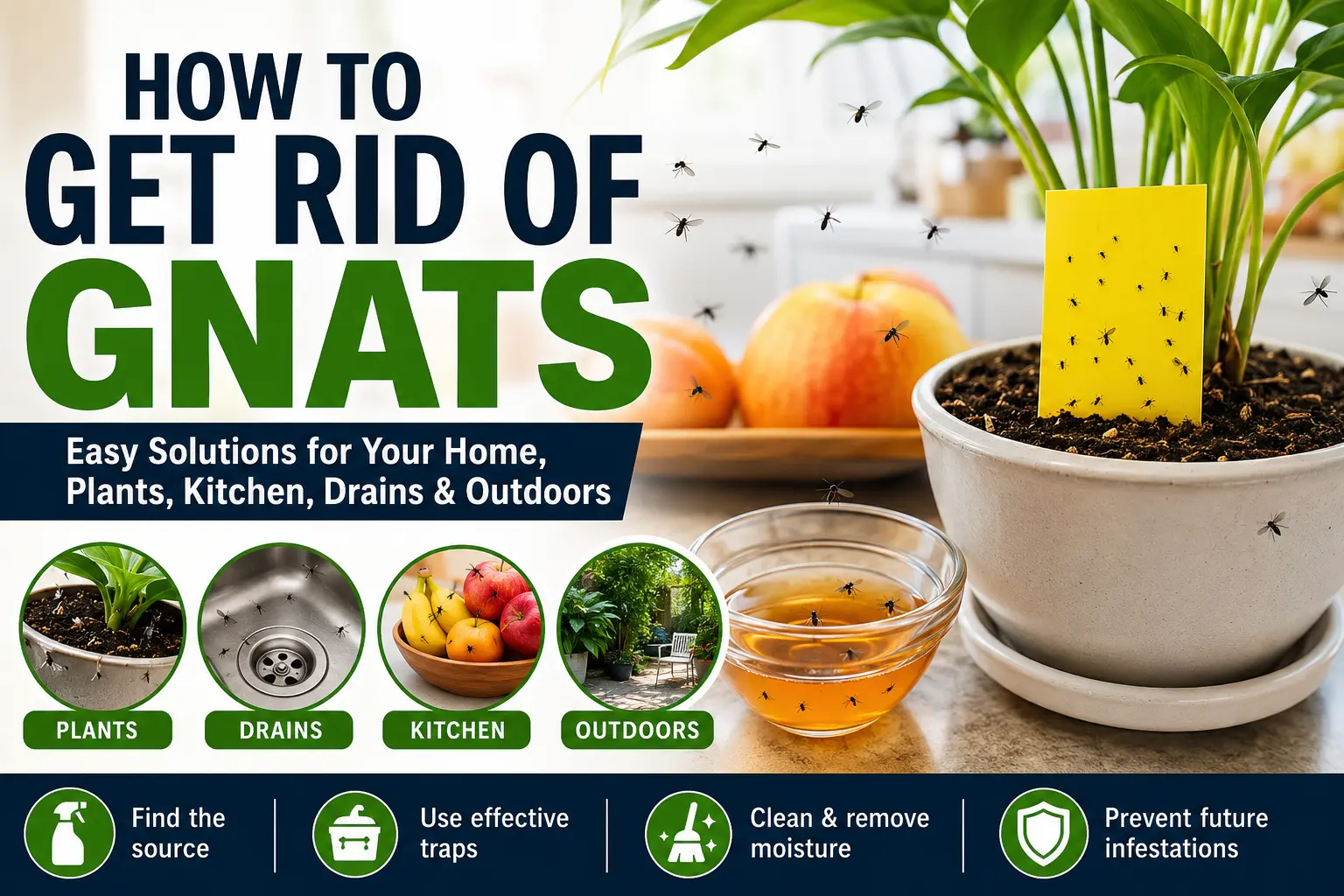
Gnats can be the most irritating household pests. In the home, these microscopic flying bugs proliferate rapidly, penetrate kitchens, fly around house plants, collect near drains and can be a nuisance if not controlled. The bright side of it is that it is possible to eliminate the gnats by employing correct cleaning, moisture control, and focused treatments.
This extensive guide will teach you how to remove gnats from house, how to manage infestations at source, and how to prevent future invasions. If you have fungus gnats, drain gnats, or gnats in the kitchen, these effective methods will help you get rid of the pests and keep your home gnat-free.
What Are Gnats?
A gnat is a small insect that flies, in particular, several particular species of gnats. While these two seem similar, it is important to determine what kind of gnat you are having problems with in order to get rid of it.
The most prevalent gnats found in homes are:
- Fungus Gnats – Found around indoor plants and moist soil.
- Drain Gnats (Moth Flies) – Live in drains and pipes.
- Fruit Flies – Lured by ripe fruit and sugar.
- Gather in outdoors in areas of standing water, gardens, and shaded areas.
Different strategies for the elimination of different species.
Discover SpiritusWellness.net for practical wellness insights, healthy living tips, mindfulness, self-care, nutrition, fitness, and holistic well-being guidance for a healthier, balanced life.
Learn How to Get Rid of Gnats in House!
When trying to eliminate gnats in house, the first place to look for them is the place where they are living.
Common breeding sites are:
- Overwatered houseplants
- Kitchen trash cans
- Dirty garbage disposals
- Sink drains
- Standing water
- Compost bins
- Moist organic material
Once the breeding source is eliminated, the adult gnats quickly disappear.
Take the Following Precautions
- Drain standing water as soon as possible.
- Empty trash daily.
- Thoroughly clean up food spills.
- Properly store fruits and vegetables.
- Repair plumbing leaks.
- Allow damp areas to dry completely.
The breeding cycle can be broken only by consistency.
How to Get Rid of Gnats in the House Quickly
If you must deal with gnats in the home in a hurry, use multiple methods.
1. Apple Cider Vinegar Trap
Put the following ingredients in a small bowl:
- Apple cider vinegar
- Several drops of detergent to clean the soap out of the bottle.
Gnats are drawn to the vinegar, and the soap disperses the surface tension of the liquid and causes the gnats to sink.
2. Sticky Traps
Yellow sticky cards are very effective gnat traps.
Place them:
- Near houseplants
- Around windows
- Close to drains
- Beside garbage cans
3. Vacuum Flying Gnats
Apply a hand-held vacuum to get rid of adult gnats in the daytime.
4. Deep Cleaning
Clean:
- Kitchen counters
- Floors
- Sink drains
- Garbage disposals
- Under appliances
Food residue gets removed, thus eliminating their food source.
How to Get Rid of Fungus Gnats
The first step to getting rid of fungus gnats is to correct excess moisture in the soil.
Fungus gnats are gnats that lay eggs in wet potting soil. The larvae of their species are fungivorous and saprotrophic.
Reduce Watering
Wait until the top 2–3 inches of soil is dry before watering again.
Breeding is interrupted by dry soil.
Remove the Surface Vegetation and Top Soil Layer and Replace It
Lift the top inch of soil with the infested bacteria and replace it with fresh soil potting mix.
Apply Hydrogen Peroxide
Mix:
- 1 part 3% hydrogen peroxide
- 4 parts water
Apply one time to control soil-dwelling larvae.
Add Sand or Decorative Gravel
Covering the soil surface with coarse sand makes it difficult for adult gnats to lay eggs.
Use Beneficial Nematodes
The beneficial nematodes are beneficial and will kill fungus gnat larvae naturally without injuring plants.
The Treatments Outlined Here Are Effective Ways to Control Gnats in Plants
The presence of plants in homes makes them a breeding ground for gnats, leading many homeowners to look for ways to eliminate them.
Use these tried and true techniques:
Improve Drainage
Make sure pots have holes for drainage.
Do not leave water in saucers for long periods of time.
Remove Very Severely Infested Plants
Replace if larvae are generalised:
- Soil
- Potting mix
- Contaminated containers
Bottom Water Plants
The soil surface remains dry, reducing the likelihood of egg-laying, by watering from below.
Maintain Plant Debris Removed
Fungus gnats are attracted to dead leaves and decaying roots.
Scrape regularly fallen leaves and organic debris.
Gnats in the House Are Another Type of Fly
Gnats in the house are as well a type of fly.
The best way to get rid of gnats in the house is to destroy adult and larval gnats.
Long-term prevention includes:
- Keep humidity low.
- Repair plumbing leaks.
- Clean drains weekly.
- Empty trash frequently.
- Use airtight food containers.
- Dry sinks after use.
- Avoid overwatering plants.
- Check for pest infestations in any plants brought in.
It’s much easier to prevent a large infestation than to treat it.
How to Get Rid of Gnats Inside the House
When you’re looking for ways to eliminate gnats in the house, check out these places you might not have thought of:
- Window tracks
- Basement corners
- Utility rooms
- Laundry rooms
- Pet food bowls
- Water dispensers
- Refrigerator drip trays
Often these hidden moisture sources are breeding grounds for moisture sources.
How to Get Rid of Drain Gnats
Drain gnats are a common misidentified problem by many homeowners as fruit flies.
You need to know what to do to get rid of gnats in the drain, not just dump chemicals in the drain.
Scrub the Drain
Clean up with a long drain brush:
- Biofilm
- Grease
- Organic buildup
This can feed drain gnats.
Thoroughly Rinse with Boiling Water
Carefully pour boiling water down the drains for a few days every day.
Baking Soda and Vinegar
Add:
- ½ cup baking soda
- 1 cup vinegar
Let the mixture foam for 30 minutes, then rinse it with hot water.
Enzyme Drain Cleaner
Biological enzyme cleaners will break down organic deposits without harming pipes.
How to Get Rid of Gnats in Kitchen
When it comes to getting rid of gnats in kitchen, remember to focus on sanitizing.
Kitchen gnats are a species that flourishes in the presence of food and moisture.
Keep Counters Clean
Immediately wipe away:
- Juice spills
- Syrup
- Coffee
- Wine
- Soda
- Cooking oils
Refrigerate Produce
Don’t put ripe bananas, tomatoes, peaches or melons on kitchen counters.
Empty Recycling Frequently
Rinse:
- Bottles
- Cans
- Food containers
Prior to putting them in recycling bins.
Clean Garbage Disposal
Use:
- Ice cubes
- Lemon slices
- Baking soda
To clean food particles that may be stuck inside the disposal.
How to Get Rid of Gnats Outside
The more you know about what to do to eliminate gnats outside, the less likely you’ll be to allow them to migrate into your residence.
Remove Standing Water
Empty:
- Bird baths
- Plant saucers
- Buckets
- Children’s toys
- Gutters
Many flying insects are attracted to standing water.
Trim Dense Vegetation
Gnats are drawn to cool, shady areas.
Permit more sunlight and air to circulate in your yard.
Use Outdoor Fans
Gnats are not good flyers.
With just a simple oscillation fan, outdoor activity around patios is greatly reduced.
Installation of Outdoor Lighting Should Be Done Carefully
Insects are less attracted to warm white/yellow LED bulbs than to white bulbs.
Use One of These Natural Gnat Remedies for a Cleaner, Gnat-Free Home
Many homeowners would rather use chemical-free solutions.
Popular natural remedies are:
Apple Cider Vinegar Trap
Very effective against numerous flying gnats.
Essential Oils
When diluted with water, peppermint, citronella, eucalyptus and tea tree oils repel gnats.
Cinnamon Powder
Pour cinnamon over the plant soil to help stop the growth of fungus which helps feed fungus gnat larvae.
Neem Oil
Neem oil which slows the growth of insects is not harmful to most indoor plants.
Here Are Some Indications of a Gnat Infestation
Look out for these signs:
- Minute insect flying around lights
- Flies that fly around the plants
- Proximity to sink drains that are close to the flies
- Apparently, this is what moths like to do around fruit bowls.
- Larvae can be seen in the potting soil.
- Watering plants stimulates activity after watering.
It’s easier to eliminate if it’s found early.
How to Prevent Gnats from Returning
Once you have gotten rid of the problem now is the time for prevention.
Maintain these habits:
- Water plants as necessary.
- Wash the drains weekly.
- Waste food to be disposed of as soon as possible.
- Vacuum regularly.
- Maintain a humidity level indoor of less than 50%.
- Seal cracks around windows and doors.
- Fix any broken window screens.
- Check new plants prior to moving into the house.
- Wash garbage cans once a month.
- Don’t set out dirty dishes over night.
Determine When to Use a Pest Control Service
In most cases the problem of gnats can be resolved by proper cleaning and moisture control but in certain cases, professional pest control may be necessary if:
- The infestations last for several weeks.
- Gnats occur even after treatment.
- Plumbing leaks are suspected but are not visible.
- Many large numbers are created on the voids of walls.
- This does not lessen the domination of the out-of-door populations.
Avoiding hidden breeding sites and more effective treatment for the infestation by professionals.
Final Thoughts
To eradicate gnats, you need to eliminate more than just the ones that can be seen. The important thing is to find and destroy the breeding grounds and keep the environment clean and dry. A combination of sanitation, moisture control, traps and preventive maintenance is effective in controlling gnats for the long term, whether you’re trying to get rid of gnats in house, get rid of fungus gnats, get rid of gnats in plants, get rid of drain gnats, get rid of gnats in kitchen, or get rid of gnats outside. These simple steps will help you control existing infestations and prevent gnats from becoming a problem in your house, plants, and outdoors year-round.
Frequently Asked Questions (FAQs)
How Long Will It Take to Eliminate Gnats?
If the breeding sources are removed and traps are maintained, most gnat infestations will get better in one to three weeks.
Why Do the Gnats Return?
If moisture, organic matter or standing water is still present for breeding gnats will return. Control of these conditions is crucial to lasting control.
Does Bleaching Work to Destroy Drain Gnats?
Bleach will kill some adult insects, but will not eliminate organic material that is where the drain gnats are generated. Scrubbing and enzyme cleaners work best.
Can Fungus Gnats Be Caused by Overwatering Plants?
Yes. Excessive watering provides perfect breeding conditions for fungus gnat eggs and larvae.
How to Get Rid of Adult Gnats Quickly?
Quickest way to decrease visible gnats is by using apple cider vinegar traps, yellow sticky traps, or vacuuming adult gnats.
Are Gnats a Problem for People?
Household gnats are a nuisance, and their bite and disease causing abilities are not major achievements. The fungus gnat larva, however, can cause injury to the roots of the plants; heavy infestations should be treated immediately.