The world gets more and more competitive by the day.
In all walks of life, from youth baseball to corporate America, the level of output is unrecognizable compared to our parents’ generation.
As people look around every corner to get the proverbial “leg up,” one area that is garnering increased attention is home design. With an online economy allowing people to “get the job done” from their own four walls, designing spaces that are as productive as they are inviting is a top priority in 2026. With this in mind, keep reading as we explore the best ways to transform any room into a productivity haven.
Prioritize Sound Mitigation
Let’s be honest: a noisy home has never been the dream.
Airports. Barking dogs. Railroad tracks.
Loud noises have tested the nerves of homeowners time out of mind.
However, in 2026, having a tranquil home environment has moved beyond the realm of comfort. It is now a matter of productivity and performance. Whether you are a remote professional, online student, or digital content creator, a soundproof home office is non-negotiable in the current market.
Fortunately, this isn’t the 90’s where garage bands stapled egg cartons to their walls and called it a recording studio. Modern sound mitigation tools and techniques are highly sophisticated. Some ideas include:
- Acoustic panels – attach to the walls similarly to a photograph. Approach an NRC of 1 with as little as 15% wall coverage. Can be wrapped in decorative fabrics for the aesthetics of your choice.
- Quiet insulation – the best insulation products do more than raise the R-value of the building envelope. They also limit noise transfer through the walls. Recycled denim batts and mineral wool are some of the most powerful “quiet” insulation products.
- Window fortification – windows are often the path of least resistance through which ambient noise enters the home. At the least, seal all cracks to guarantee that no whistling winds can move unobstructed through window-to-wall transition. When possible, upgrade to double- or triple-paned glass to better block sound waves. Innovative window seal kits can also give your windows next-level sound protection.
Balance Natural and Artificial Lighting
It is well-documented that natural light has many benefits.
Mood enhancement. Circadian (sleep) rhythm regulation. Less optical strain.
With that said, there are times when too much daylight is not always ideal for productivity. Perhaps the blazing sun is causing too much warmth. Or the glare off your computer screen makes you have to bring in the porch umbrella.
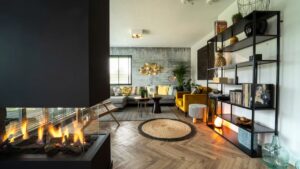
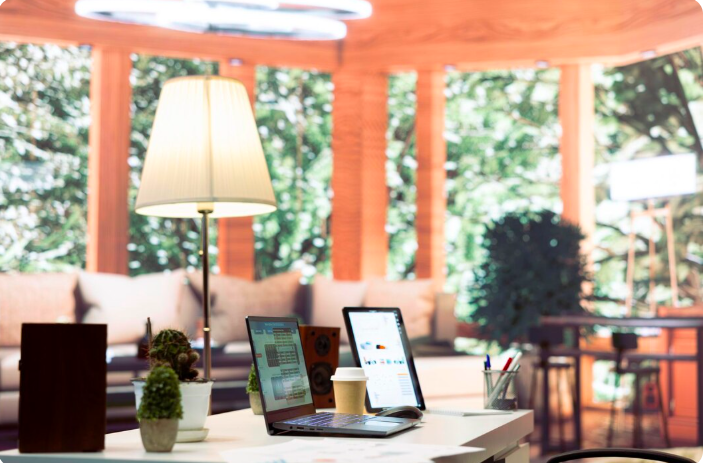
In these cases, use window treatments as necessary to mitigate excess sunlight and employ a strategic artificial lighting approach to enhance productivity. Layered lighting, such as combining overhead lights with desk lamps, creates a bright, comfortable environment that doesn’t give off harsh shadows. Cool white and blue-enriched light bulbs increase alertness. Having adjustable lamps at your disposal allows you to task light as needed for reduced eye fatigue once the sun goes down.
Use Low Maintenance Materials
“Once you go remote, you never go back.”
This is the mantra of many employees who have gotten a taste of working from home. The perks are numerous.
However, remote work has its downsides. One of which being that you get to double as the office custodian.
Cleaning up that spilled mug of coffee is bad enough without having to break out the carpet shampooer or grout cleaner in the minutes ahead of an important meeting.
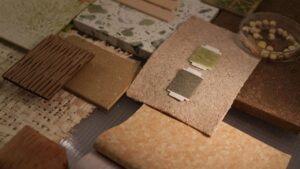
Therefore, give yourself greater flexibility to focus on more important tasks by designing with low maintenance materials. Nonporous LVT flooring. Solid surface office desks. Magnetic cable sleeves for electrical cords to limit dust trapping
Understand the Ergonomics
Human-centered design.
The concept of prioritizing human needs and movements throughout all stages of the design process.
While there are a plethora of considerations factored into the equation, when it comes to designing for productivity, ergonomics carries a heavy load.
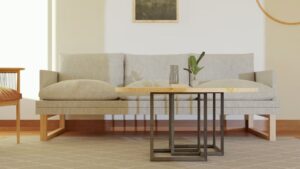
Adjustable furniture is crucial. Chairs with lumbar support and sit/stand desks guarantee that you are not stuck in an uncomfortable position for hours at a time. Customized storage space allows you to get what you need, when you need it without having to perform an acrobatics stunt. Give yourself plenty of space as well, ensuring ample room to stretch, pivot, and stand, as necessary.
Minimize Clutter
It can be tempting to daydream about everything we could have if we were millionaires.
But look at the desks of most C-suite executives for Fortune 500 companies and you will find…nothing?
That’s right.
The workspaces of some of the most highly productive business people in the world are conspicuously devoid of “stuff.”
A computer. A notepad. Perhaps a favorite picture.
They understand that cluttered areas cause nothing but chaos. They are stressful. They are distracting. And they create a scramble to clean up should an important guest drop in unannounced.
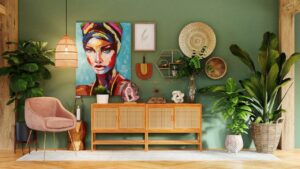
Therefore, adopt a “less is more” approach when crafting a productivity space. Have a statement desk tie the room together. Use a couple of low-profile plants for a touch of biophilia. Keep a few important books on a single bookcase, using the rest of the shelf space for strategic decor items. Adopt a “one in, one out” system to keep unnecessary stuff from accumulating.
The Best Choices for Enhanced Home Productivity
In 2026, home design is about more than comfort. Creating a productive environment is just as crucial. From elite soundproofing to sleek, clutter-free spaces, consider the ideas listed above for next-level productivity from home. For more of the latest trends in real estate and home design, explore the content at Home the Spruce for ideas and inspiration today!